Nature
 PUBLISHED
 1
1

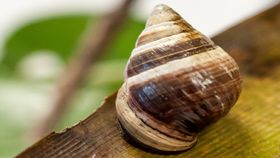


The world's loneliest land snail and last known of its species, Achatinella apexfulva, known to locals simply as “George,” died on New Year’s Day, killing with it hope for a species-wide recovery.
According to a press release from Hawaii’s Department of Land and Natural Resources (DLNR), George served as an “ambassador for the plight of the Hawaiian land snails,” making headlines in local newspapers and entertaining hundreds of school children over the years. The 14-year-old land snail got his name from the Pinta Island Galapagos tortoise dubbed “Lonesome George,” also the last of his species.
“While from vastly different evolutionary lineages, these Georges lived simple lives in captivity. Both quietly carried millions of years of evolution – their entire genome and blueprint for how to make them – into oblivion,” wrote Hawaii DLNR in an obituary-style Facebook post.
A. apexfulva was the first of over 750 species of land snails from Hawaii that were described in western science, with its first mention dating back to 1787 when a captain coined the new species after seeing its shell on a gifted lei. Characterized by a yellow tip known as an “apex fulva,” A. apexfulva was once common in the region and were used to make leis, given their accessibility. Researchers collected the last 10 known specimens in 1997 and brought them back to a lab at the University of Hawaii for captive breeding. While some offspring were produced, all but George eventually died.
-
“George matured in a cage by himself, and although we called him a "he," the snail was a hermaphrodite, having both male and female parts. Unfortunately, A. apexfulva seem to have been an obligate outcrossing species, meaning that it needed a partner to reproduce,” explained Hawaii DLNR, concluding that remaining species of Hawaiian land snails face threats from invasive species and climate change.
-
“Sadly, his passing is also a harbinger of what’s to come for our remaining K?huli (tree snails) if more is not done quickly to protect them from invasive species and climate change. Many of the island’s remaining land snails are facing imminent extinction,” wrote Hawaii DLNR.
-
A 2-millimeter snippet of George's foot was collected in 2017 for scientific purposes and remains alive in a deep freeze at San Diego’s Frozen Zoo®.
“While it is currently not possible to clone a snail, it certainly will be someday,” concluded Hawaii DNLR. “George may yet live again!"

[H/T: Earther]