Nature
 PUBLISHED
 2
2


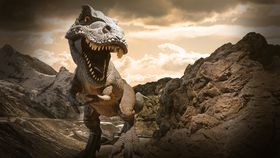


When watching Jurassic Park, what do you think is more frightening, Tyrannosaurus rex’s ear-splitting roar or the anticipatory low, rumbling thud of its footsteps? If you think the low rumble, you are closer to the truth, according to a new BBC documentary The Real T-Rex.
Aiming to explore the “astonishing truth” about everyone’s favorite fearsome creature after years of misrepresentation by pesky Hollywood studios (to quote Jurassic World: "This creation exists to fulfill a corporate mandate – they want something bigger, louder, with more teeth.") researchers have created not only the most accurate CGI representation of a T-rex ever, but also what they think it would have sounded like too.
“The most chilling noises in the natural world today come from predators, the howl of the wolf, the roar of the tiger, but experts now doubt that T-rex sounded anything like them,” says TV presenter and naturalist Chris Packham, who fronts the show, the Telegraph reports.
So if not the blood-curdling roar of moviedom, then what?
Researchers at the University of Texas, led by Professor Julia Clarke, tested the theory that dinosaurs may have actually sounded a lot more like their bird and reptile relations than modern predatory mammals.
By combining the booming call of the Eurasian bittern with the growling vocalizations of the Chinese crocodile, and then scaling it up to T-rex’s estimated size (about 12 meters or 40 feet long), what they got was a terrifyingly ominous low rumble that raises the hair on the back of the neck.
"This could be the first time in 66 million years that this sound has been heard on Earth," Packham says in the clip above. "It's a shot in the dark, but we are using the best evidence we've got."
“I feel like this sound just induces fear,” Clarke responds. “People think you need a roar to be really scary, but isn't that the scariest sound you’ve ever heard?"
The researchers describe it as a low rhythmic thud, similar to the sounds you often get in horror movie music, because low-frequency noise, which is often felt as well as heard, is more frightening, or even potentially paralyzing, than high-frequency noise.
Studying T-rex's inner ear showed that it was also particularly sensitive to low-frequency sounds, which can travel through the ground, suggesting that this may have been how the creatures "talked" to each other over long distances, much like elephants and whales do.
The program also explores how T-rex really would have looked like, moved, and behaved. You can watch The Real T-Rex on BBC iPlayer in the UK, and on BBC Worldwide at a later date to be confirmed.