Nature
 PUBLISHED
 3
3




Field trips are pretty much the holy grail of school days. I mean, they’re basically tiny holidays with all your friends. What could be better than that? A group of schoolchildren from New Zealand who went on a trip in 2006 might have the answer: what if you managed to discover a brand-new species of giant prehistoric penguin while you were there?
“It's sort of surreal to know that a discovery we made as kids so many years ago is contributing to academia today,” said former child and fossil hunter Steffan Safey in a statement. “And it's a new species, even! … Clearly the day spent cutting it out of the sandstone was well spent!"
So why has a penguin that lived between 27.3 and 34.6 million years ago come back into the news a full decade and a half after its discovery? When the children of the Hamilton Junior Naturalist Club (also known as JUNATS) found the fossil in Kawhia Harbour, they knew it was important – huge and amazingly well-preserved, it was quite the improvement on the sea urchin fossils they had expected to find. But it wasn’t until 2017 that the specimen was donated by JUNATS to the local Waikato Museum, where researchers from Massey University and Bruce Museum in Connecticut, USA were able to analyze the ancient penguin.
The results, published today in the Journal of Vertebrate Paleontology, have elevated the fateful 2006 field trip from “lucky” to “history-making”: the kids of JUNATS, it turns out, had uncovered a brand-new piece of the penguin fossil record.
“It’s been a real privilege to contribute to the story of this incredible penguin,” said Dr Daniel Thomas, Senior Lecturer in Zoology at Massey. “We know how important this fossil is to so many people.”
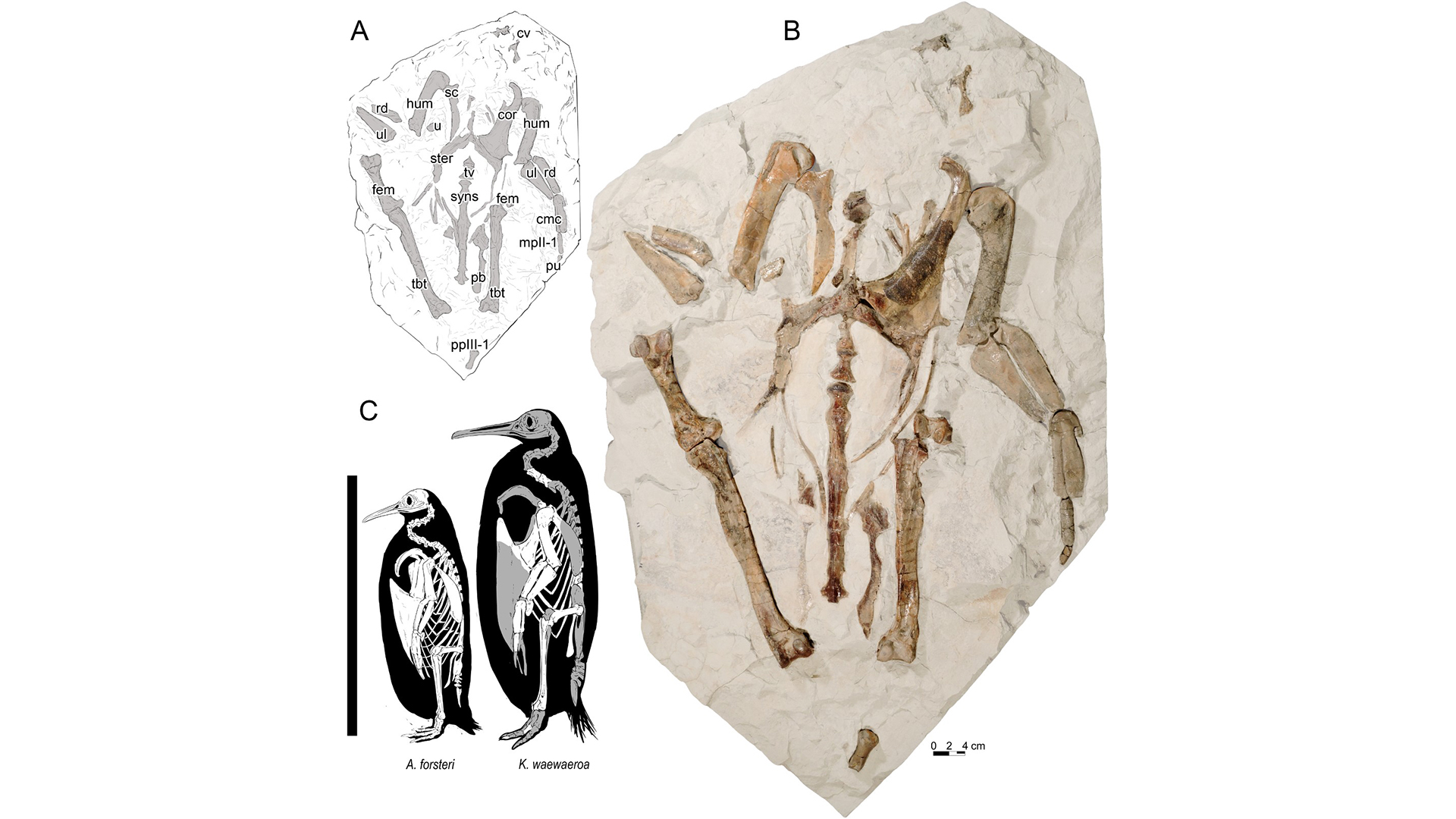
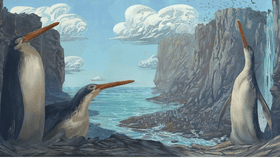
The researchers discovered the penguin’s status by 3D scanning the fossil and comparing the bones to digital versions of other penguin skeletons. Although the tuxedoed birds have a fossil record that stretches back almost as far as the dinosaurs, not much is known about the history of giant penguins in New Zealand – though we do know the antipodean birds looked quite different from their modern-day cousins. The newly analyzed penguin has a lot in common with other ancient New Zealand penguins, and seems to have been the catwalk model of its day: it had “much longer legs” than other species, explained Thomas, which “would have made the penguin much taller … perhaps around 1.4 meters tall, and may have influenced how fast it could swim or how deep it could dive.”
It's these long limbs that give the new species its name: Kairuku waewaeroa. Fittingly, these are Te reo Māori terms: Kairuku means “diver who returns with food”, and waewaeroa means “long legs”.
“Kairuku waewaeroa is emblematic for so many reasons,” Thomas said. “The fossil penguin reminds us that we share Zealandia with incredible animal lineages that reach deep into time, and this sharing gives us an important guardianship role.”
“The way the fossil penguin was discovered, by children out discovering nature, reminds us of the importance of encouraging future generations to become kaitiaki [guardians],” he added.
So along with having discovered one of the most complete fossils ever uncovered of a giant penguin, the kids of JUNATS now get to boast the discovery of a brand-new ancient species – and the good news doesn’t stop there. Thanks to the cutting-edge scanning methods carried out by the researchers, the team were able to create a 3D-printed replica of the fossil for the Hamilton Junior naturalists.
"It was a rare privilege for the kids in our club to have the opportunity to discover and rescue this enormous fossil penguin,” said Mike Safey, President of JUNATS. “We always encourage young people to explore and enjoy the great outdoors. There's plenty of cool stuff out there just waiting to be discovered.”