Nature
 PUBLISHED


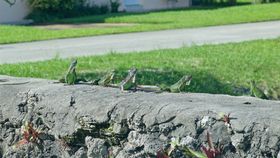


It’s an unusual concept to many people, but for Floridians, a showering of iguanas is becoming a seasonal event. Iguanas aren’t native to Florida, but as an invasive species, they have thrived in the state and are wreaking havoc on its native species and ecosystems. While they are hardy invaders, iguanas are quite sensitive when it comes to the weather. During the warm summer months these cold-blooded reptiles are right at home, but come winter they suffer as the cold air near-petrifies them. “Frozen” iguanas then rain down from the trees where they had perched, plopping to the ground like an over-ripe apple.
Iguana fall is becoming frequently more familiar for Florida’s residents, as despite efforts to cull this invasive species – and even serve it up as dinner, ever tried tree chicken? – their numbers continue to grow. As such, each year when the iguana fall season (also known as winter) creeps in, the cold air sends increasing numbers falling to the ground.
Despite their very much not-alive appearance, the fallen iguanas are rarely actually dead. In most cases, they simply got too cold to function and were unable to maintain their purchase on the branch they were climbing. If, like the kind-hearted Twitter user below, you want to give them a helping hand, you can place them in a sunny spot where the warming temperature will revive them. It’s worthy to be wary, however. Like any wild animal, if an iguana wakes up while you’re cradling it in the sun it might lash out to defend itself. If you choose to take a different approach towards these invasive animals, it’s worth making sure it’s a lizard and not a person before you act.
So, how did Florida come to be inundated with iguanas? The invasion was facilitated by ships traveling from Central America, parts of South America, and some Caribbean islands to the United States, which passed on the infestation in the same way whaling ships once infested South Georgia with rats. Stowaway lizards that had snuck onboard disembarked in Florida’s favorable climate, and without their usual predators around they were free to blossom in their new home.
Iguanas are also popular pets and legal to be kept as one in the state of Florida. What isn’t allowed (despite probably happening a lot) is for them to be released when the owner grows bored of their scaly companion. Since their arrival and release they have taken over much of the state, and while some have even been spotted in the north, they are best suited to the warmer climate of the south. When winter hits, however, it’s a very different story. And that’s how you end up with a weather forecast of iguana fall.