Nature
 PUBLISHED

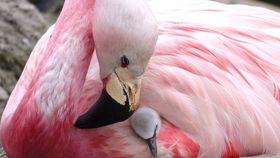


A flock of Andean flamingos (Phoenicoparrus andinus) at a wildlife reserve in Gloucestershire, England, have been getting all hot and bothered of late – and they have the summer heat wave to thank. Staff at the Wildfowl & Wetlands Trust (WWT) Slimbridge have released a statement celebrating the good news that the birds have laid eggs for the first time in 15 years.
“It’s a wonderful and welcome surprise that the Andeans have started laying again after nearly two decades,” Mark Roberts, Aviculture Manager at Slimbridge, said.
“We’ve been encouraging the flock by helping them to build nests but there’s no doubt that the recent heat has had the desired effect."
All in all, six birds laid nine eggs between them. Sadly, none of these were fertile. To compensate, wildlife experts swapped the eggs for some laid by a close relative of the Andean flamingo, the Chilean flamingo. This, they believe, will fulfill the birds' maternal and paternal needs while encouraging them to lay more, some of which will (hopefully) turn into chicks.
“It’s great motivation and enriching for the birds,” Roberts added.
The two species of flamingo live side by side in the wild and in several ways are very similar. One of the most noticeable physical differences between the two is the shape of the bill. Chilean flamingos have shallow-keeled bills (handy for munching on insects, invertebrates, and little fish), whereas Andean flamingos have deep-keeled bills (perfect for slurping up algae, which, incidentally, is the reason for their millennial-pink hue).

Of the six species of flamingo, the Andean is the rarest with fewer than 40,000 remaining in the wild. They are listed as "vulnerable" on the IUCN Red List. WWT is the only place in the world where you can see all six in one place.
The birds tend to lay one egg at a time and the last time the flock at WWT Slimbridge successfully bred was back in 1999. One of the original chicks is now nesting with a chick of her own.
Flamingos have a very peculiar mating dance and tend to breed colonially, with up to thousands of individual birds taking part at any one time. Watch their (almost) synchronized moves in the video below.