Nature
 PUBLISHED


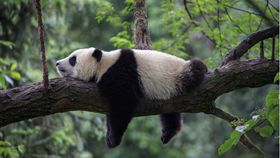


Pandas, once the poster-bear for conservation and the plight of endangered species everywhere, are doing surprisingly well these days. Researchers seem to have finally found a way to get the notoriously modest creatures to mate, and numbers are on the up. Now, they just need somewhere they can go, roam, hang out, and generally not be bothered by us to continue this good work.
To this end, China has announced the creation of a new protected conservation park for the animals reported to be three times the size of Yellowstone National Park.
The park, which will be around 2 million hectares (5 million acres) or 27,134 square kilometers (10,476 square miles), will be located in the Sichuan province in southwest China.
There are an estimated 1,800 pandas living in the wild, all in China and all in the three provinces of Sichuan, Gansu, and Shaanxi. Of these, 80 percent live in the forests of Sichuan. The hope is that a huge protected park will encourage the isolated populations across the provinces to meet, mingle, and reproduce, all away from the prying eyes of the public.
Although pandas were downgraded from “endangered” to “vulnerable” on the IUCN Red List in 2016, their numbers are still relatively small and slow-growing.
Giant pandas are incredibly slow-producing animals. They only reach sexual maturity around 4-8 years of age, and females only ovulate once a year, for just 2-4 days on average, so the chance of conceiving is already a rather small window.
Mother bears then care for their cubs for up to three years, so the chance of a repeat performance soon after is smaller still.
On top of that, deforestation and habitat loss have resulted in habitat fragmentation, resulting in isolated areas inhabited by populations that never meet. Ensuring the park is protected allows for a wide unbroken range to roam, giving the animals a higher chance to come across other populations and not only breed but mix up the gene pool a bit.
As if we need an excuse to include a video of pandas being adorably ridiculous.
The funding for the park is to be shared between the provincial government and the Bank of China, which has pledged 10 billion yuan ($1.6 billion), with plans for the park to be finalized by 2023.
Sichuan officials have told state-run newspapers that the park will boost the local economy and help alleviate the poverty of the 170,000 residents who currently reside in the proposed areas, The Guardian reports.
Managing the needs of both the local populations who deal with the realities of living near vulnerable wild animals, as well as the animals themselves, is key to their protection.