Nature
 PUBLISHED
 1
1


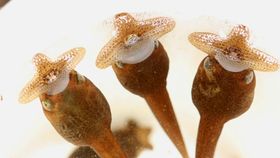


In their early lives, frogs undergo one of the most magnificent metamorphoses in the animal kingdom as they transform from small, worm-like wrigglers into four-legged leapers. This glow up has made it quite difficult for scientists to match tadpoles to their adult forms, since they bear no physical resemblance to one another. A recent review from the Zoological Society of London (ZSL), Indo-Myanmar Conservation, The Australian Museum, and Hoang Lien National Park looking at tadpoles in Vietnam however has finally placed a tadpole with very unusual features to a group of horned frogs.
The tadpole in question has highly specialized mouthparts that help them to eat things suspended on the water’s surface, which project from the mouth in three directions. The remarkable adaptation allows them to eat from a section of the water column that is out of bounds for other tadpole species.

Researchers were able to link this extraordinary tadpole to the horned frogs thanks to a wide scale review that combined geographical data with morphological measurements and DNA to samples to connect tadpoles to specific frog species.
“Frogs and their tadpoles look nothing like each other but it’s important to know which tadpole becomes which frog” said lead author Benjamin Tapley, the Zoological Society of London’s Curator of Reptiles and Amphibians in an emailed statement. “It helps us detect the presence of a species, especially as adult frogs can be seasonally active and difficult to find and allows us to identify which places might be important frog breeding sites that need protection.”

The work allowed them to identify and describe the tadpoles of six species of frog belonging to the genus Megophrys, also known as Asian horned frogs. In solving the mystery of these unclaimed tadpoles, the team has learnt how diverse and also how threatened these frogs are as they are better able to assess where the six species are found in the country’s wild spaces. They are all found in some of the world’s most exploited forests where habitat loss and degradation are rife, putting each species at risk from extinction if preventative steps aren’t taken.