Nature
 PUBLISHED
 7
7



First came the fires, then high waters. Now, one of the planet’s most venomous spiders is making its Australian appearance en masse, say wildlife experts.
“WARNING! FUNNEL-WEB SEASON IS HERE!” writes the Australian Reptile Park.
The “bonanza” of deadly spiders comes after Australia has experienced the worst wildfire season in decades, which is responsible for killing at least 28 people and more than 1 billion animals. Following weeks of devastating bushfires, the southern continent is now seeing extreme weather with golf ball-sized hail, dust storms, flooding, and projected rain across much of the country, which has helped firefighters get a handle on the fires in drought-stricken areas, reports the BBC.
When the climate gets humid after rainstorms, funnel-web spiders leave their burrows to avoid being flushed out. They may also use this rare opportunity to find a mate.
"We are issuing a message of warning to the public as recent wet weather conditions followed by hot days have created perfect conditions for funnel-web spiders to thrive," said the park in a video post on its Facebook page.
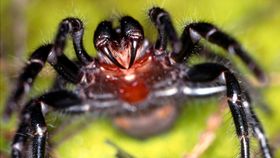
At least 40 species of funnel web-spider reside in Australia, among the most toxic being Atrax robustus, or the Sydney funnel-web spider. A. robustus has one of the most toxic venoms to humans of any spider, with males being six times more potent.
Measuring between 1.5 centimeters and 3.5 centimeters, the shiny black spiders burrow into sheltered sites and dash out of their dens when potential prey, beetles, cockroaches, small lizards, or snails walk over silken trip-lines the spider has laid outside of its burrow, according to the Australian Museum. When threatened, the arachnid shows aggressive behavior by rearing up and displaying its fangs, but overall the spiders get a bad rep as they tend to stay away from humans. In fact, no one has died from a funnel-web spider bite since the 1980s in large part due to antivenom programs at the Australian Reptile Park.
The park is the nation’s only zoo “committed to saving lives” through its venom milking program, which has been in place for more than 50 years. Every year, the park notes that over 300 lives are saved through its supply of a variety of venoms, which are used for all snake and funnel-web antivenom. The park is the sole supplier of antivenom for the spiders, but naturalists say they need more male funnel-web spiders to bolster their program. If you can capture one safely, do so and bring it in, they add.