Thank you!

We have emailed you a PDF version of the article you requested.

Can't find the email?

Please check your spam or junk folder

You can also addnewsletters@iflscience.comto your safe senders list to ensure you never miss a message from us.

IFLScience Home
IFLScience logo

Support Science Journalism

Become a member

SUBSCRIBE
  • account

    ACCOUNT

  • astronaut

    SIGN IN

  • exit

    SIGN OUT

search

Search

  • more-iconclose moreTopics
    • Humans
    • Health & Medicine
    • Nature
    • Space & Physics
    • Technology
    • Culture & Society
  • Latest
  • Trending
  • Video
  • Podcasts
  • Events
  • NewsLetters
  • Magazine
  • more-iconclose moreMore
    • Features
    • eBooks
    • About Us
  • The vault

Support Science Journalism

Become a member

SUBSCRIBE
  • trending-iconTrending
  • clock-iconLatest
  • more-iconclose moreTopics
    • Humans
    • Health & Medicine
    • Nature
    • Space & Physics
    • Technology
    • Culture & Society
  • Features
  • Video
  • Podcasts
  • Events
  • NewsLetters
  • Magazine
  • more-iconclose moreMore
    • eBooks
    • About Us
  • THE VAULT
  • Sign Out
  • Support Science Journalism

    Become a member

    UPGRADE
  • account

    MY ACCOUNT

  • exit

    SIGN OUT

  • account

    MY ACCOUNT

  • THE VAULT

  • MAGAZINE

  • exit

    SIGN OUT

nature-iconNature
clock-iconPUBLISHEDJanuary 10, 2019
comments icon4

Audubon Photography Awards Release The Best Entries Of Birds Chowing Down And They're Hilarious

Madison Dapcevich headshot

Madison Dapcevich

Madison Dapcevich headshot

Madison Dapcevich

Freelance Writer and Fact-Checker

  • email

Madison is a freelance science reporter and full-time fact-checker based in the wild Rocky Mountains of western Montana.

BookView full profile


BookRead IFLScience Editorial Policy

  • twitter-icon

Freelance Writer and Fact-Checker

Madison is a freelance science reporter and full-time fact-checker based in the wild Rocky Mountains of western Montana.View full profile

Madison is a freelance science reporter and full-time fact-checker based in the wild Rocky Mountains of western Montana.

View full profile
article image

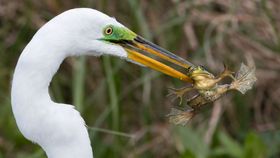
Found in both salt and freshwater, Great Egrets feed on aquatic animals – like this leaping frog – that make their home in wetlands, ponds, tidal flats, and other areas. Peter Brannon/Audubon Photography Awards

Follow on GoogleGoogle preferred source badge

In the latest release of the Audubon Society's bird-nerd photos, we're given a glimpse into the predatory realm of our flying, feathery friends and let's just say we have never been more happy to be at the top of the food chain. 

The photos were released as part of the nonprofit conservation organization's annual photography competition, and even though these images didn't necessarily take home the grand prize, they remind us just how eclectic and unique the avian world truly is. As Audubon notes, birds need to eat a lot in order to survive – we can only imagine how tiring flying around can be. For many species, that means fueling up requires eating as much as one-third of their body weight every day. Dainty little hummingbirds might eat up to 100 percent of their body weight in nectar alone, while the medium-sized Cooper's Hawk eats around 12 percent of its weight each day. For a human weighing around 68 kilograms (150 pounds), that's the equivalent to 8 kilograms (18 pounds) of grub, about 48 cheeseburgers. 

Not to mention, the diet of our avian amigos is quite the nature-inspired buffet. In 2018, photographers from around the world captured birds eating everything from fish to frogs and lizards to starfish – even other birds (oops). 

So, grab your lunch and take a few minutes to yourself to admire the wonderful world of predatory birds. Though you may lose your appetite and there may be terrible puns (you are warned), we promise it'll be worth it. 

I regret nothing...

Herring gull. Photo: Christi Herman/Audubon Photography Awards

It's tough being an owl by oneself. We're sure that's why this northern pygmy owl below was captured toting around their little rodent friend, right? 

Northern pygmy owl. Pierre Cenerelli/Audubon Photography Awards

Speaking of little buddies, this majestic peregrine falcon was also spotted palling around with its buddy, the common grackle. Hawkward...

Peregrine falcon and Common Grackle. Scott Dere/Audubon Photography Awards

 No (r)egrets about this move. 

Reddish egret. Tim Timmis/Audubon Photography Awards

At least wait for your tern! Clearly, nobody taught these two table manners. 

Least terns. Anja Trepper/Audubon Photography Awards

Most animal puns quack us up, but this one is just morbid. 

Snowy owl with red-breasted merganser. Matthew Booth/Audubon Photography Awards

 Are you puffin' kidding me, bro?

 
Atlantic puffins. Krisztina Scheeff/Audubon Photography Awards

Hey, I'm walking here. 

Purple gallinule. Tina Wright/Audubon Photography Awards

And don't forget that the 2019 Audubon Photography Awards are currently open for submissions! You can submit your best bird photos here. 


clock-icon
ORIGINALLY PUBLISHEDJanuary 10, 2019

Written by Madison Dapcevich

Follow on GoogleGoogle preferred source badge

Add us as a Google preferred source to see more of our
trusted coverage in Search


nature-icon

More Nature Stories

link to article

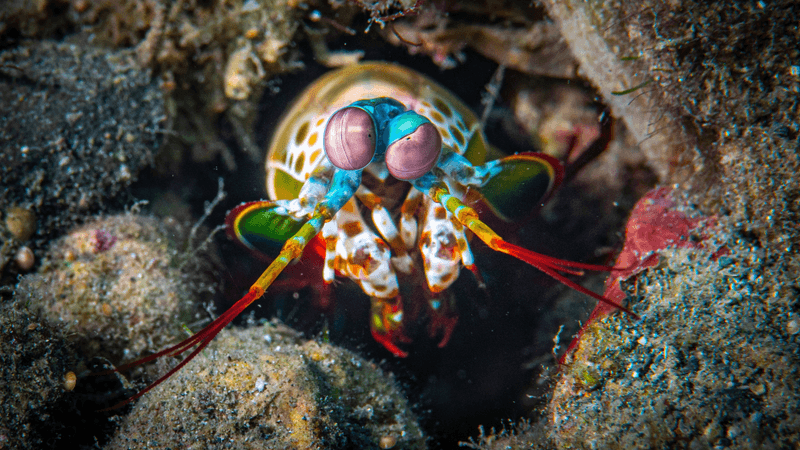
Mantis Shrimp Are The Only Known Animals To See This Kind Of Light, And They Use It To Send Secret Signals Without Alerting Predatorsa mantis shrimp sits in among some rocks, it is very colorful with giant eyes
nature-iconanimals

Mantis Shrimp Are The Only Known Animals To See This Kind Of Light, And They Use It To Send Secret Signals Without Alerting Predators

clock-icon3 hours ago

link to article

North America Had A Continent-Spanning “Mega-Escarpment” A Kilometer High, And It Might Explain The Grand Canyon’s Great MysteryA view across the grand canyon showing its pinky-orange cliffs.
nature-iconplanet earth

North America Had A Continent-Spanning “Mega-Escarpment” A Kilometer High, And It Might Explain The Grand Canyon’s Great Mystery

clock-icon20 hours ago

link to article

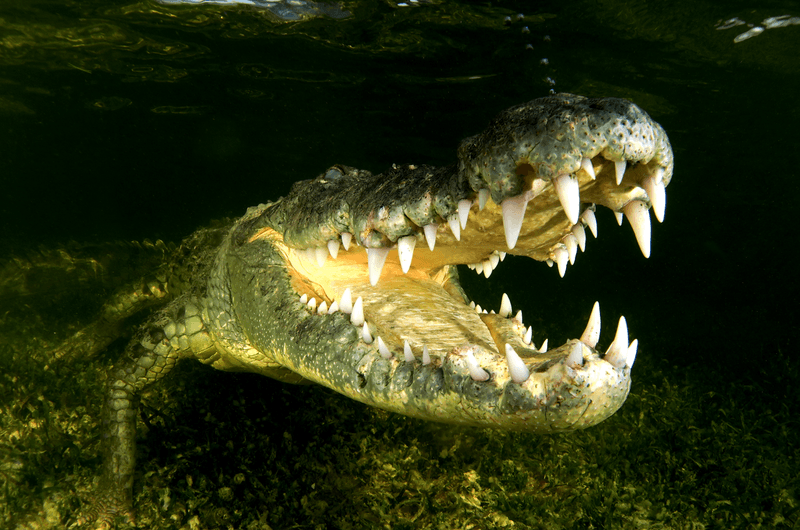
Crocodile Ancestors Were Once Warm-Blooded But Re-Evolved Cold-Bloodedness To Suit Their Sinister Lifestyleocodile lies on the ocean floor, mouth partially ajar,
nature-iconanimals

Crocodile Ancestors Were Once Warm-Blooded But Re-Evolved Cold-Bloodedness To Suit Their Sinister Lifestyle

clock-icon20 hours ago
video-icon

Multimedia

link to article

Can AI Be Conscious? | IFLScience The Big QuestionsA picture of a man staring at a robot face, over laid with a mobile phone that has the big questions logo on it.

Can AI Be Conscious? | IFLScience The Big Questions

link to article

How Do Animals Get Their Patterns? Find Out More In Issue 49 Of CURIOUS – Out NowA picture of the front cover for the Curious magazine issue 49 showing a multi coloured turing pattern with the words "How do animals get their patterns?".

How Do Animals Get Their Patterns? Find Out More In Issue 49 Of CURIOUS – Out Now

link to article

Are "Natural Disasters" On The Rise? | IFLScience The Big QuestionsA picture of a mobile phone displaying The Big Questions logo overlaid on a picture of a flooded neigbourhood.

Are "Natural Disasters" On The Rise? | IFLScience The Big Questions

More Multimediamore-icon
IFLScience Home
IFLScience logo
FacebookFacebookFacebookInstagramYouTubeYoutubeRSSRSS
The
IFLScience Home
IFLScience logo
Newsletter

Receive weekly science coverage direct to your inbox

Navigation

  • Home
  • Team
  • About
  • Careers
  • Subscribe
  • Company & Product Insights

Contact

  • Contact
  • Write For Us
  • Submit News
  • Advertise With Us
  • FAQs & Support

Editorial

  • Editorial Mission
  • Correction Policy
  • Comment Policy
  • Transparency Policy
  • Fact-Checking Policy

Legal

  • Terms Of Use
  • Cookie Policy
  • Privacy Policy
  • Advertising Policy
  • Corporate Social Responsibility
  • Change Cookie Settings
  • Do Not Sell
  • Manage Push Notifications

© 2026 IFLScience. All Rights Reserved. RSS