Nature
 PUBLISHED



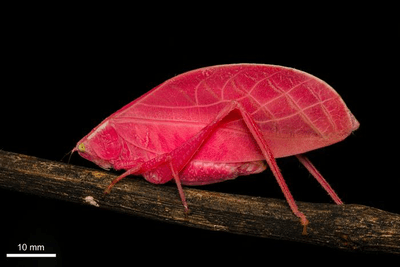


When you hear the name leaf-masquerading katydid, or the nickname “bush cricket” you probably imagine something as green as fresh grass. And you would nearly always be right, but at least one individual of the species arota festae would catch you out with its bright pink coloration. Rather than a failure of camouflage, researchers who witnessed it think the insect has evolved a particularly sophisticated way to blend in.
Researchers spotted the unusual bug while at the Smithsonian Tropical Research Institute field station on Barro Colorado Island, Panama. "Finding this individual was a genuine surprise," said Dr Benito Wainwright at the University of St Andrews, Scotland, in a statement. "Because it was so rare, we kept it in natural conditions and found it changing color from hot pink to green.”
Eleven days after its discovery, the katydid's coloration was indistinguishable from that of others of its kind.
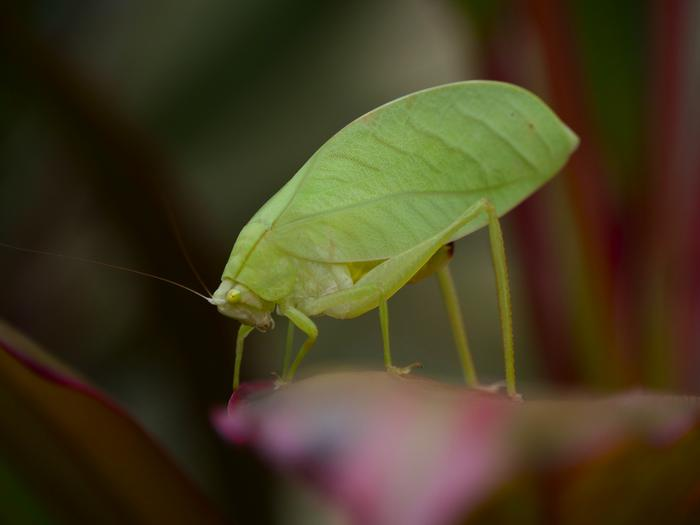
Looking like a leaf is such a natural survival mechanism that it occurs across many branches of the insect family tree, including in hundreds of katydid species, many of which have carefully modeled themselves on the leaves of specific trees and are almost always green or brown.
Nevertheless, naturalists have been reporting pink katydids since at least 1878, as well as pink individuals of some related species. However, they usually attribute the color to a non-competitive mutation, like an insect counterpart to albinism.
However, after capturing and photographing the katydid every day of its transformation and watching it successfully mate once it matched the usual color of its species, Wainwright and his colleagues think previous scientists got this wrong.
"Rather than a bizarre genetic quirk, this may actually be a finely tuned survival strategy that tracks the life cycle of the rainforest leaves this insect is trying to resemble,” said Wainwright.
Robert Frost famously wrote: “Nature’s first green is gold.” Had he lived in Panama, his poem might have started: “Nature’s first green is pink,” (and probably would have been less successful for it) since many tropical leaves start out pink or red, turning green later as the chlorophyll kicks in.
Indeed, Wainwright and his colleagues note that 36 percent of the plant species native to Barro Colorado have leaves that start off red, white or pink. It is thought leaves this color are less nutritious to herbivores, so starting out this way helps them make it to maturity.
For an insect 27 millimeters (1.1 inches) long and less than a gram in mass whose survival depends on fooling predators, perhaps pink is sometimes the less conspicuous color.
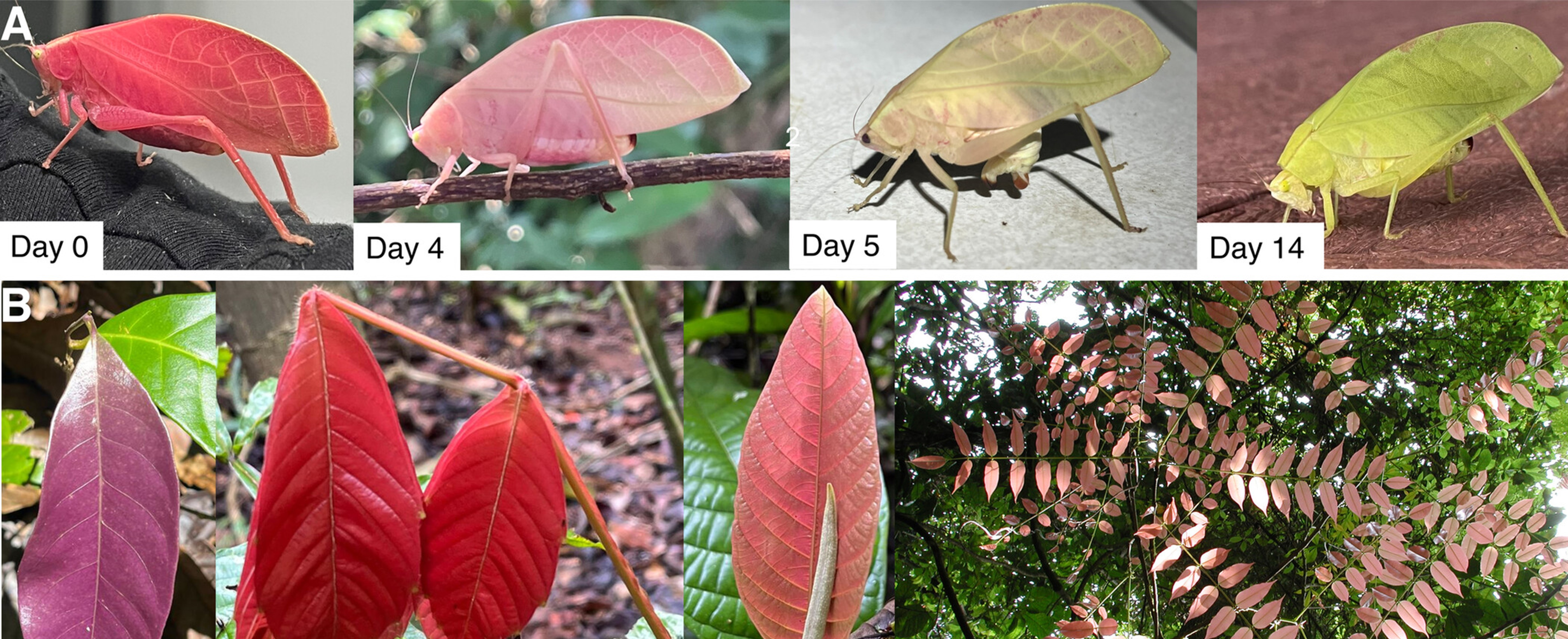
“It is unknown if the color change is reversible, or if the timing of the switch is genetically predetermined, but given the conditions in which our focal individual was raised, it is possible that diet (i.e., consumption of green vegetation in its rearing cage) and background color (i.e., resting on green vegetation in its rearing cage) contribute towards the transition,” the authors write.
Dr Matt Greenwell at the University of Reading, UK, said; "Tropical forests are extraordinarily complex environments, and this discovery hints at just how precisely some animals have evolved to exploit them. You would think that a bright pink insect in a mostly green forest would stand out to predators like a worker in a high-vis jacket. The idea that an insect might gradually shift color to keep pace with the leaves it mimics shows how dynamic the rainforest can be, and is a remarkable example of camouflage in action."
Despite the possible advantages to being pink, the rest of the 22 A. festae found during the team's four-month field trip to the location were green when observed. You might argue that this goes to show the effectiveness of pink camouflage, but the team thinks the pink ones are actually a tiny minority.
While Kermit may be right that it isn’t easy being green, perhaps being anything else comes with its own disadvantages.
The report has been published in the journal Ecology.