Health and Medicine
 PUBLISHED
 1
1


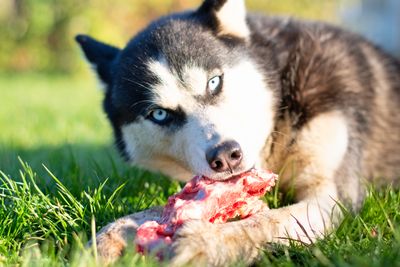


A dead body that’s been gnawed upon by cats and dogs might sound like a particularly grisly cold open to an episode of Bones, but pet-scavenged bodies aren’t just the stuff of police procedurals – your pets would probably eat you if you died. Thankfully, if that death happens to have occurred under criminal circumstances, new research means that using hungry pets to cover it up might not be that smart of a plan.
Coming across a dead body that’s been scavenged by pets is surprisingly not all that uncommon. Whilst it’s not exactly resting in peace, it makes sense that cats and dogs might give us a little nibble given that they are carnivorous and probably peckish. However, it can be a pain for those trying to investigate deaths, as scavenging can potentially cover up its more nefarious causes.
In a recent study, anthropologists from the University of Bern set out to determine trends across known cases of pet scavenging and how this could be used in assessing the cause of death. If you want to look at the paper, it’s linked at the bottom of the article, but be warned – the images are not for the squeamish.
The team collected published reports of cases where scavenging by pets had occurred (there was even a hamster involved in one case – never looking at Penfold in the same way again) and identified seven recent cases in Switzerland where cats and dogs in particular had caused issues for investigators due to their snacking.
Picking out the problems allowed the researchers to create a flowchart that could be used by investigators to determine what evidence to collect and how and when to collect it, to determine whether or not an animal scavenged a body and if so, what animal.

Alongside taking photos and samples of animal fur and feces, the team suggests noting down the size, breed, and number of animals, as well as considering how gnawing or bite marks might have mimicked or obscured forensically relevant wounds. Arming investigators with this methodology could help them focus on areas that often seem to be missed or dismissed as irrelevant.
“Our study highlights the need for sophisticated documentation, particularly for distinction between human-inflicted injuries and scavenging, but also discrimination between cats and dogs, and between canines of different sizes,” the authors conclude. “It also shows that the information typically collected at scenes of indoor scavenging is insufficient to perform a discrimination study.”
It's hoped that, with the flowchart in hand, investigations of death could “overcome these aspects and gather systematic information for future indoor death scenes with questionable scavenging activity.”
So even if you do receive the double whammy of dying under suspicious circumstances and being munched on by your otherwise loving pet, you can rest in peace knowing that whoever’s investigating hopefully won’t be hindered by your dog nibbling your nose.
The study is published in Forensic Science, Medicine and Pathology. Again, don't click if you're squeamish.