Nature
 PUBLISHED


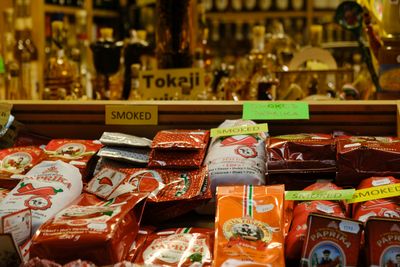


Paprika, and its more flavorful cousin, smoked paprika, show up in everything from paella to Hungarian goulash. You’d think most people would have at least a rough idea of what it’s made from, but according to a slew of ongoing internet confessions, that assumption would be very wrong.
It turns out, paprika is not its own special plant, but regular Capsicum peppers that have been dried and crushed into powder.
The peppers used for paprika are generally the species Capsicum annuum, which are longer and thinner than the typical red bell peppers sold in US supermarkets.
Not all paprika is the same, however. By crushing different varieties of C. annuum, and using different techniques of drying the fruit, it’s possible to create a variety of subtly different flavours.
The species was first brought to Europe by early Spanish and Portuguese explorers of the Americas. Over time, the Europeans bred milder and milder versions of the plant, bringing out a much sweeter flavor. The ground variety of the pepper, aka paprika, spread out of the Iberian Peninsula and became a staple of the Eurasian spice trade, eventually arriving in central Europe via the Ottoman Empire.
Countries across the world enjoy sprinkling their food with paprika, but it is perhaps most associated with the cuisine of Hungary in Central Europe, where it has become the national spice and features in their national dish, goulash. The word "paprika" itself stems from a Hungarian word derived from the Serbo-Croatian word papar, which in turn evolved from the Latin piper, meaning pepper.
In short, paprika doesn't have its own tree, as that tree is already used for perfectly ordinary peppers.
An earlier version of this story was published in 2023.