Nature
 1
1



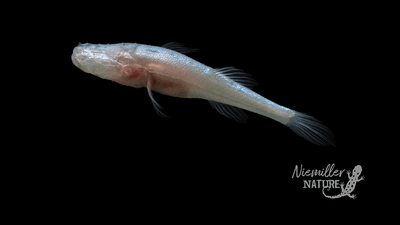


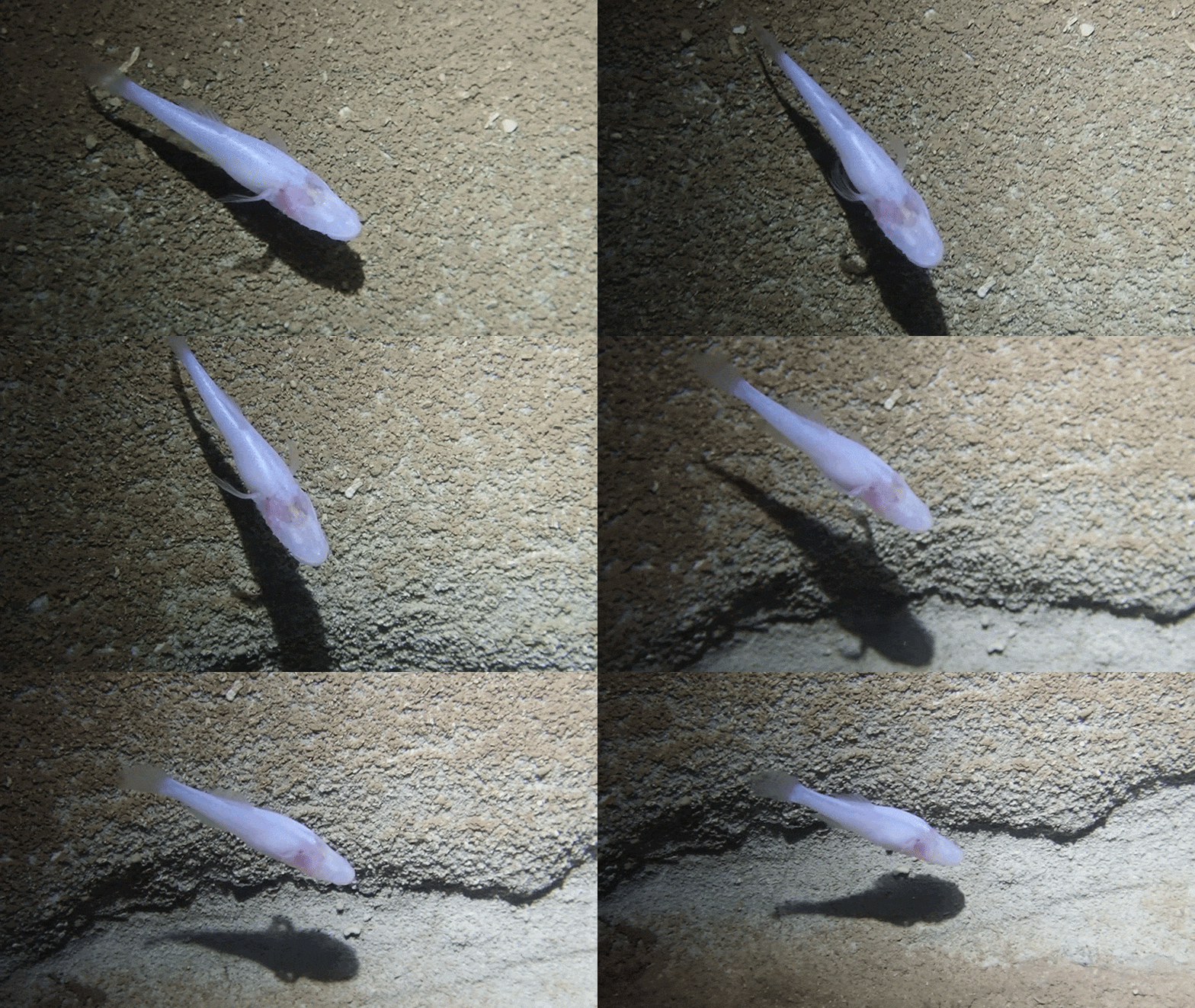
Even well-studied areas can still hold surprises. In northern Alabama, USA, a new species of pale, blind, demon cavefish has been discovered in an area that has been explored for more than 40 years.
Exploration of Bobcat Cave, on the Redstone Arsenal army base near Huntsville, have led to the discovery of all kinds of amazing, cave-dwelling species, including the Alabama cave shrimp. As a result, scientists now survey the site each month.
The misconception I run into most is the idea that these animals are somehow degenerate... I'd flip that entirely. These are among the most specialized animals on the planet.
Jonathan Armbruster
In February 2025, this led to something else catching their attention. In the gloom of the cave, the researchers noticed a pale, eyeless cavefish, and this got them thinking.
“Honestly, my first thought was ‘don't get excited yet, but I think it's a new species’," Matthew Niemiller, from the University of Alabama at Huntsville and first author of the paper, told IFLScience.
"Over the years, I've seen how variable cavefish can be, and I've been fooled before by animals that looked different but were genetically very similar,”
Niemiller sent images to Professor Jonathan Armbruster from Auburn University and co-author Pamela Hart before returning to collect specimens for further investigation.
“This [fish] was different in ways that kept holding up," Niemiller continued. "It has unbranched fin rays, the pronounced hump behind the head, and a longer and flatter snout. It wasn't just one odd feature.”
These distinct parts of the cavefish, as well as CT imaging and genetic analysis, led the team to confirm it as a new species.
The team decided to call the fish Demogorgonichthys arcanus, after the Demogorgon in Stranger Things.
“I'll happily give the naming credit where it's due, and that was really Jon and Pam," says Niellmiller.
"My role was mostly to say 'yes, absolutely.' I loved it instantly, because it works on so many levels. It's the ancient underworld demon of mythology, which later became the monster in Dungeons & Dragons and Stranger Things, and because a blind, pale creature from the permanent dark practically names itself."
"Arcanus - "hidden" - was the perfect finishing touch for a fish that stayed unrecognized for so long."
They probably do not eat often and will eat any animal that fits in their mouths.
Jonathan Armbruster
Remarkably Demogorgonichthys arcanus is not only a new species, but represents an entirely new lineage of cavefish. This is a surprise, because it shares its subterranean home with another species called the southern cavefish.
"The misconception I run into most is the idea that these animals are somehow degenerate, that a cavefish is just a regular fish that 'lost' its eyes and went pale, a kind of downgrade," says Armbruster. "I'd flip that entirely. These are among the most specialized animals on the planet."
The new species is known from a single cave system, which might make it one of the rarest species of fish in the world. But fortunately for the fish, its future seems well protected.
“The cave that they are in is already protected because of the Alabama cave shrimp, another imperiled species, that occurs with it," explains Armbruster.
"Although Redstone Arsenal is in heavy use, the area around the cave is protected. There is always a potential problem with groundwater contamination, especially as Huntsville grows, but it is in a fairly good place as the area is restricted."
Currently, the team knows almost nothing about the ecology of this new species. It's thought that maybe the juveniles eat copepods, as a young fish was seen attempting to catch them in December 2025, but the team don't really know.
“We are CT scanning one of the Demogorgonichthys specimens to see what is in the stomach," says Armbruster. "It is clear that there is something in there. I X-rayed it, and it looks to be another cavefish, but the images were not clear. They probably do not eat often and will eat any animal that fits in their mouths.”
This discovery highlights that new species can be found in even well-studied areas. Armbruster and Niellmiller both stress that new species have even been discovered by hobbyist cavers.
“This fish is a reminder of how much life is hidden right beneath our feet, in the same groundwater we all depend on. We're standing on one of the richest cave landscapes in the country in northern Alabama, and we're still discovering the animals that live in it,” finished Armbruster.
The paper is published in Scientific Reports.