Nature
 PUBLISHED
 1
1


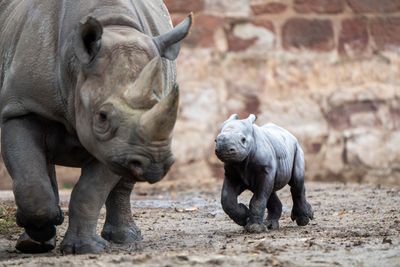


This month, conservationists at Chester Zoo, UK were thrilled to hear the pitter-patter of tiny rhino toes as an incredibly rare, critically endangered new arrival was safely born – and they captured it all on camera.
New mum Zuri, an eastern black rhino, gave birth to a female calf on November 12 following a 15-month pregnancy. Unusually for the species, the calf, which has yet to be named, was born during the day at 2.45 pm, allowing the keepers to witness the birth via cameras inside the rhino habitat.
“We’d been eagerly awaiting this birth for 15 long months and, as it’s quite unusual for a rhino to give birth in daylight hours, we really didn’t expect it to happen right in front of us as we were going about our day," said Emma Evison, Chester Zoo's Rhino Team Manager, in a statement sent to IFLScience. "To be able to witness the calf safely entering the world, in front of our very own eyes, was just the most incredible privilege.”
The eastern black rhino (Diceros bicornis michaeli) is a subspecies of the black rhino. There are fewer than 600 left in the wild across Kenya, Tanzania, and Rwanda, according to the IUCN. This species and many others are critically endangered because of the illegal wildlife trade, where rhinos are killed for their use in traditional Asian medicines. Chester Zoo says this new arrival will help conservation efforts to stop this species from going extinct.
“Sadly this is a species that, for more than century, has been hunted down and poached for its horn before being sold on the illegal wildlife markets," continued Evison.
"This precious newborn’s arrival is another positive step in safeguarding the species, which is what the endangered species breeding programme in European conservation zoos that we’re a leading part of is striving to do. This program has already showed huge success, with a group of rhinos bred in zoos in Europe having been translocated to a protected National Park in Africa."
Southern white rhinos are also set to be on the move across South Africa as part of an ambitious plan to rewild 2,000 of them, around 15 percent of the global population, from a controversial commercial breeding program.
Chester Zoo has worked hard to make the birth of this eastern black rhino calf happen using skills and techniques the animal endocrine lab to track hormone levels in the rhino dung. The technique has been so successful that they have shared the knowledge with a specialist lab in Kenya to further support breeding efforts in the wild population.
The team reports that the new arrival is doing well and is sticking close to her mother as she explores her home.
.jpg "Small rhino calf with big ears explores outside on muddy ground")
“Zuri and her new arrival is testament to the unwavering dedication of conservationists here at Chester, and around the world, who are working to safeguard these incredible animals and ensure that they thrive long into the future,” said Mike Jordan, Director of Animals and Plants at Chester Zoo.