


 Nature
 PUBLISHED


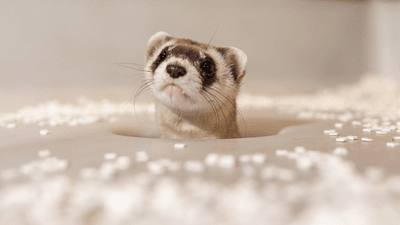


In 2020, the world rejoiced as scientists successfully created a black-footed ferret clone known as Elizabeth Ann using the frozen cells of a deceased individual called Willow. Elizabeth Ann was a boost for the endangered species, Mustela nigripes, and now it’s got two extra playmates: the black-footed ferret clones Antonia and Noreen.
All three of the clones come from the same tissue samples collected from Willa back in 1988 at San Diego Zoo Wildlife Alliance’s Frozen Zoo, the same repository that’s attempting to use frozen skin to make northern white rhino embryos. Like the rhino skin cells, the use of Willa’s genetic material is hoped to boost the genetic diversity of the living black-footed ferret population, as it contains three times more unique genetic variations than the modern-day average for these animals.
The conservation project is a partnership between the US Fish and Wildlife Service, Revive & Restore, ViaGen Pets & Equine, Smithsonian’s National Zoo and Conservation Biology Institute, San Diego Zoo Wildlife Alliance, and the Association of Zoos and Aquariums. It aims to overcome genetic obstacles currently hampering efforts to restore the population of black-footed ferrets, whose future is at risk if there isn’t enough genetic diversity left in the pool of survivors.
Expanding the gene pool with a clone from a deceased animal reduces the risk of inbreeding-associated health problems, which are often seen in “pure-bred” dogs or offspring born from incest, which usually only happens among mammals when there are no other mates to choose from. The reason for this genetic bottleneck is that all black-footed ferrets alive today are born from just seven individuals. A dip in genetic diversity puts them at risk of certain diseases, including sylvatic plague and the canine distemper virus.
To tackle this, the ferret clones are one of several approaches to try and restore some of the black-footed ferret’s former genetic diversity. It's hoped that in tandem with habitat conservation projects, it could one day make it possible to reintroduce black-footed ferrets to the wild.

Antonia came into the world at the Smithsonian’s National Zoo & Conservation Biology Institute in Virginia. Meanwhile, Noreen is housed at the National Black-footed Ferret Conservation Center in northern Colorado, the same place where Elizabeth Ann resides.
There was hope Elizabeth Ann might have been able to have a few kits of her own by now, but a condition called hydrometra has prevented it. For a quick ferret anatomy class, the females have two uterine horns that are crucial for fertilization. Unfortunately, one of Elizabeth Ann’s never fully developed (which is not believed to be linked to the fact that she is a clone), while the other has filled with fluid, known as hydrometra.
The black-footed ferret poster girl is otherwise in good health, and efforts to restore a healthy genetic spread for one of the world’s most endangered mammals continue.


 1
1