Nature
 PUBLISHED


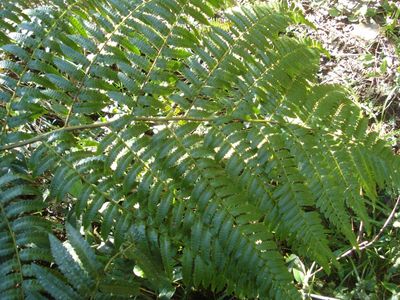


Plants have been up to some pretty weird tricks already this year and now a tree fern species (Cyathea rojasiana) has joined the party. Well, in order to join in it first has to die and then come back from the dead to help its mother. Let us explain.
Cyathea rojasiana is a tree fern species found in the forests of western Panama. In a new discovery, the fern is found to be able to reanimate its own dead leaves, making roots that then pull nitrogen from the soil that keep feeding the mother plant.
When alive, the aging leaves are tilted downwards so that the middle of the leaf, known as the rachis, can touch the ground. As the leaf dies off, the structures inside the rachis that once carried water to the living leaf parts, change and become living roots instead. These new living roots dig down into the soil and keep providing nutrients to the rest of the plant.
“This is a truly novel repurposing of tissue. And it’s distinct from what we know other ferns do,” said Professor James Dalling, lead author of the study, in a news release.
The fronds of the tree fern appear to be simply decaying plant matter even when the conversion to root process is happening. The team think this is the first case of a fern being able to repurpose the leaves of a plant to feed itself in this way.
Why the plant might do this is traced back through geological time. The plant belongs to an ancient lineage of tree ferns that dates back to the Jurassic period. It is thought that the roots that develop from the dead leaves evolved to draw more nutrients out of poor volcanic soils.
“Panama is a land bridge between North and South America that coalesced 7 million years ago out of an archipelago of islands, and those islands are the result of volcanic activity in the past,” said Dalling. “In one site we discovered, a layer of volcanic ash several meters deep looks like sand that you would dig up on a sandy beach. The plants that grow there are distinct from those that we find elsewhere in that forest reserve.”
The tree fern is very slow growing, and invested a lot of energy in resources into growing the leaves in the first place. The fact they only grow to around 2 meters (6.5 feet) tall helps to ensure that when the leaves start to age and droop they always touch the ground. Perfect for their zombie comeback.
The paper is published in Ecology.