Nature
 PUBLISHED





The largest catfish ever caught in Tennessee weighed 55 kilograms (122 pounds). Given an average catfish can be just a couple of kilograms, you can see why anglers were so excited by the catch.
The pursuit of big fish has led humans to all sorts of extremes, from using stink bait to lure them out with rotting fish, to the dangerous practice of noodling, where anglers stick their arms in fishes’ mouths. Even more dangerous still is hunting them deep inside an underwater cave.
Journey with me back to August 1992. The Tennessee sun is warm, Boyz II Men is pumping on the radio, and a man named David Gant has an idea. He and a friend are going fishing, but they’re leaving their rods at home.
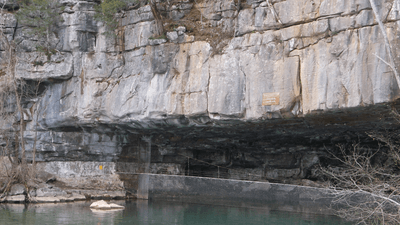
You see, on August 14 Gant had come across a giant lurking deep within the now-underwater Nickajack Cave. The historic cave – once a stronghold for Chickamauga Native Americans resisting white settlers, and later a saltpeter mine for the Union and Confederate armies – used to be above water, but it was flooded in 1967 when Nickajack Dam was constructed.
The vast network of underwater caves were claimed by fish while the small patches that remained above became home for endangered gray bats. Their protection meant it was illegal to enter Nickajack Cave, but that didn’t stop Gant and many others from sneaking through the entrance so they could explore it underwater.
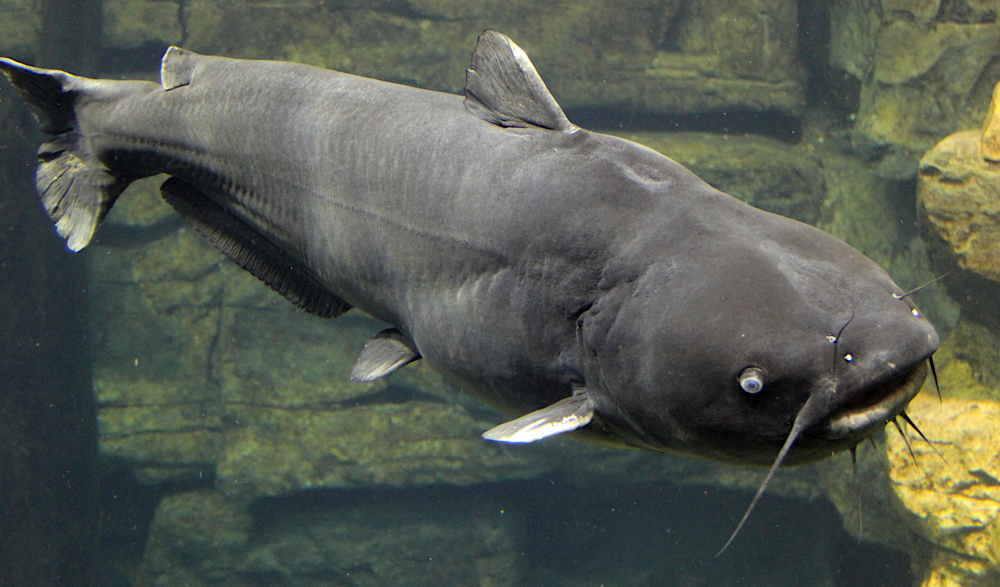
It was on one such dive on August 14 that Gant speared a huge catfish. It got away, but he was determined to return and claim his prize.
He came back the next night with a dive buddy and they explored the sprawling cave system for around an hour. Oxygen gauges in the red, they decided to call it a night and surface, but when they reached the air pocket they thought was above them, they found only solid ceiling.
The pair moved in the direction of the exit, but again surfaced and found no air pocket. Panic rising, they got separated and Gant went in one direction while his companion went the other.
His dive buddy reached an air pocket near the entrance and got out. Gant, who swam in the opposite direction, also found a small air pocket, but it was a long way from where he needed to be.
The initial search operation outlook was that Gant was likely dead. Either drowned or asphyxiated in a small air pocket that would lose its oxygen swiftly. An initial dive by police turned up no sign of him, but when a pair of cave experts joined the team, it was decided there was still hope.
Those experts were Buddy Lane, Captain of the Hamilton County Cave/Cliff Rescue Team and his lieutenant Dennis Curry. They met with the Tennessee Valley Authority (TVA), who were responsible for the dam, and acquired maps of the cave systems that detailed their heights and likelihood of having an air pocket big enough for Gant to still be alive.
They also persuaded the TVA to alter the flow of water to Nickajack Dam so that levels within the cave would drop. They did, and within an hour the active rescue search team had an extra 14 inches of airspace to work with.
Lane and Curry entered the cave, calling out to Gant as they journeyed further in until eventually someone called back to them. They emerged inside the air pocket that had been sustaining Gant for around 17 hours. At first it had just been a few inches of air. Enough to keep him alive but not without feeling the symptoms of hypoxia. Then, the water levels had dropped and bought him a little more time.
"The Bat Cave Miracle" saw Gant safely guided out of Nickajack Cave by two experts he was convinced were angels. Fair enough under the circumstances and especially given something similar is alleged to have happened to Johnny Cash.
Ironically, the worst bit of the dive for Lane and Curry were the big fish they called “cave sharks” that kept making them jump. Suffice to say, we don’t advise going for a swim in Nickajack Cave. Not only is it illegal, but the catfish have the upper hand.



 1
1