Space and Physics
 PUBLISHED
 2
2


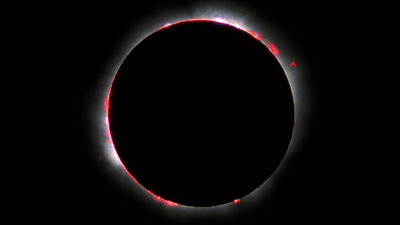


There is a reason some people chase solar eclipses around the world: this is definitely not a phenomenon where if you’ve seen one, you’ve seen them all. Instead, each solar eclipse is different, and the April 8 North American total solar eclipse will likely come with a few extra features, including an abundance of red, pink, and possibly white streamers and loops.
The upcoming solar eclipse will be longer than most and will occur when several planets, and maybe even a comet, are in the sky, adding to the show at totality. However, perhaps the most distinctive feature of this eclipse is that it is happening so close to solar maximum, when the chances of flares and coronal mass ejections (CMEs) are highest.
Solar storms are hard to predict, certainly more than a week in advance, so we don’t yet know if there will be activity while the Sun is blocked by the Moon, offering us a chance to see its corona. However, we know that, statistically, the chances are much higher now than during the last total solar eclipse in the US in 2017, when solar activity was on the decline from a peak much lower than this one.
Solar maximum is a product of the 22-year cycle of the Sun’s magnetic field, during which two peaks occur around 11 years apart. Right now, that magnetic field is tangled, producing sunspots, flares, and the CMEs that cause auroras.
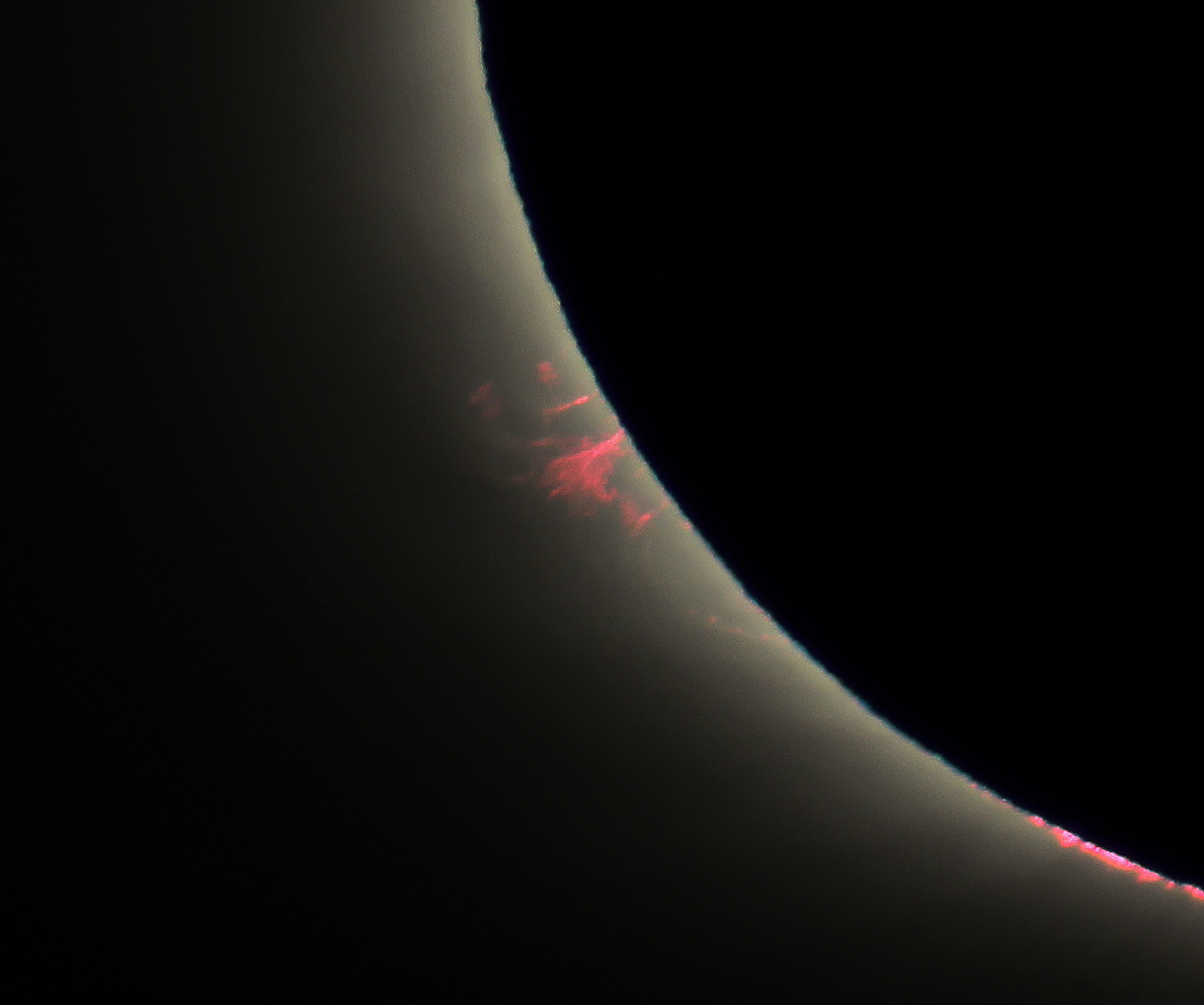
Even when solar activity is at a minimum, prominences can be seen around the edge of the Sun, either using hydrogen alpha filters or when the Moon blocks most of the Sun’s light. This time, however, they should be much longer and more abundant, looking like streamers pointing away from the Sun, often appearing red and pink. If a flare times itself well, you may see it lifting off the Sun. CMEs are rarer, but can be visible for much longer; if any occur before the eclipse, they could still be seen.
The 2023 solar eclipse that touched the coast of Australia included a fine display of prominences. The Sun was less active at that point than it is today, and the eclipse was also a great deal shorter.
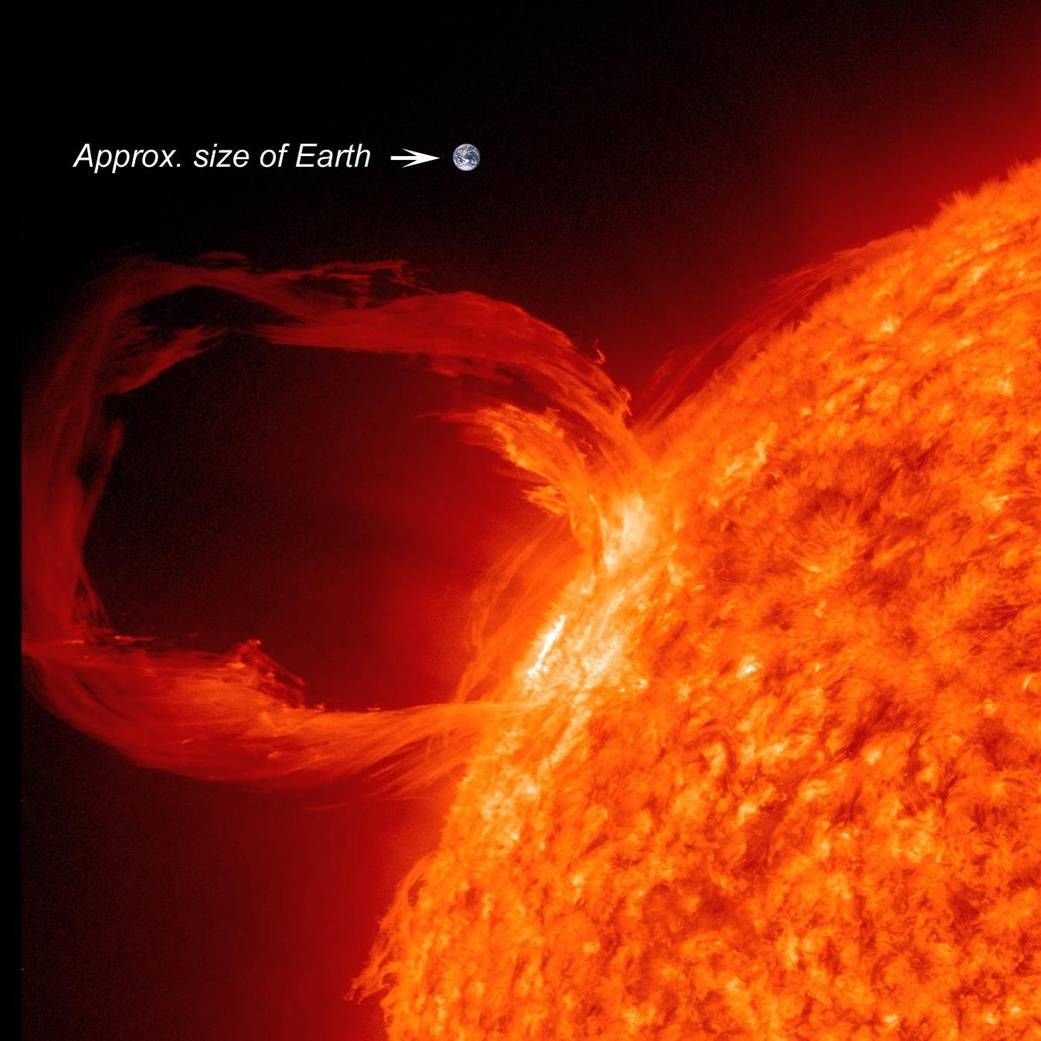
Prominences are usually longer than the diameter of the Earth, and some have been as long as the width of the Sun. Most often one end is tethered to the Sun, creating a streamer effect, but sometimes occurs as an arch, often with both ends anchored to sunspot regions.
Although there is some uncertainty about their causes, prominences are composed of hydrogen and helium like the Sun itself, and are held up against gravity by magnetic fields. Rarer coronal loops can resemble an arched prominence in shape, but are much hotter.
Prominences emit light in the red part of the spectrum as a result of the hydrogen alpha transition. However, combined with white light from ordinary thermal emissions, it can produce a pink effect.
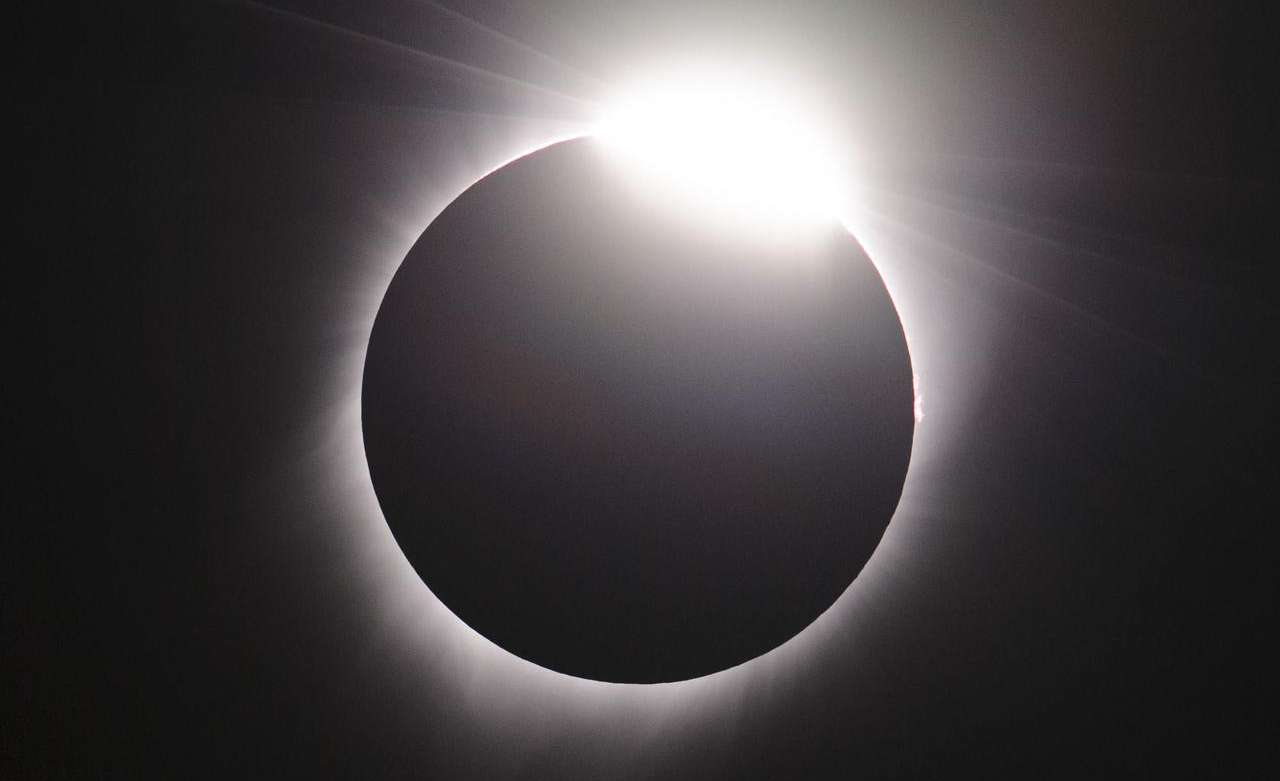
All of these are separate from the regular eclipse phenomena of the Diamond Ring effect, caused by a thin slither of unblocked Sun, and Baily’s Beads, visible when valleys between lunar mountains allow pockets of sunlight to stream through.