Nature
 PUBLISHED


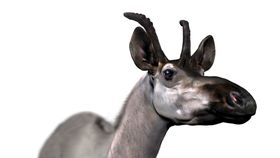


Palaeontologists in Spain have discovered the fossilized remains of a new giraffid which has helped them better understand the lineage of the giraffid family.
The discovery, reported in PLOS ONE, was made near Madrid, Spain. The new species has been named Decennatherium rex and it lived during the late Miocene, around 9 million years ago, in the Iberian peninsula. It is a surprisingly complete specimen and the researchers are particularly interested in its skull.
There are 30 described extinct members of the giraffid family but a lack of skulls has been a big challenge in working out the relationships between them and their living descendants. Skulls are extremely important in determining the relationships within clades, groups of organisms that have a common ancestor. This finding allows researchers to compare both its anatomical and phylogenetic data with other known species, both living and extinct.
The skull of D. rex has four horn-like protuberances, known as ossicones, two above the eyes and two further back. The team believes that this specimen is the first known example of this particular ossicone layout. This would make its genus the most basal branch of a clade of extinct giraffids, which includes the sivatheres and the samotheres.
"New four horned extinct giraffid Decennatherium rex from Cerro de los Batallones sheds light on the evolution of the giraffid family and the extinct giant Sivatherium," lead author María Ríos, from the National Museum of Natural History, Spain, said in a statement.

Including the Decennatherium in the sivathere-samothere clade would make this extinct group of giraffids the most successful that ever lived, both geographically and chronologically. They would have existed between 9 million and a few thousand years ago, from Africa and Europe, all the way to the Indian sub-continent.
There are currently only two living giraffids, okapis and giraffes. Recently, genetic analyses have shown that there are four species of giraffe. Unfortunately, all these wonderful animals are endangered due to human activity. The current estimates suggest that their numbers might have shrunk by about 40 percent in just the last 15 years.