Nature
 PUBLISHED




A new dinosaur has been discovered on the Isle of Wight, England, and it’s very fancy indeed. The dinosaur, a new iguanodontian, has a dramatic sail-like structure running along its back and tail, which researchers believe may have evolved as a way to impress potential mates.
The discovery was made by Jeremy Lockwood, a retired medical doctor, as part of his PhD research with the University of Portsmouth and the Natural History Museum, London. The fossil specimen had been part of a collection held at the Isle of Wight’s Dinosaur Isle Museum, but was only noticed when Lockwood reexamined them as part of this work. Until this point, the fossil, which is 125 million years old, was assumed to belong to one of the two known iguanodontian dinosaur species found on the island. However, Lockwood noticed something special about this specimen.
"While the skeleton wasn't as complete as some of the others that have been found, no one had really taken a close look at these bones before," Lockwood explained in a statement.
"It was thought to be just another specimen of one of the existing species, but this one had particularly long neural spines, which was very unusual."
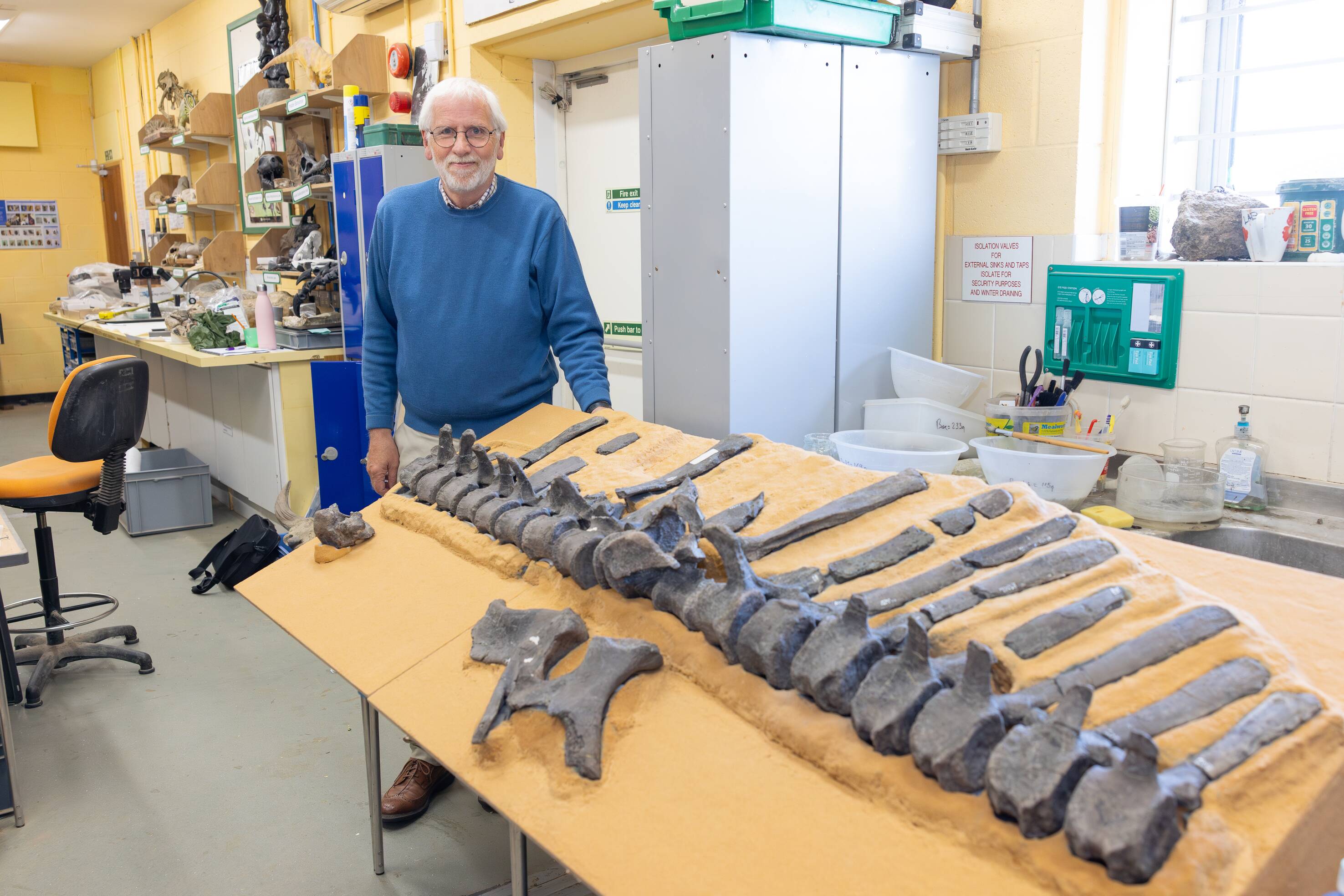
Closer inspection indicated that this animal would have probably had a pronounced sail-like ridge on its back, which set it apart from other dinosaurs discovered on the Isle of Wight.
The new species has been named Istiorachis macarthurae, after a famous resident of the Isle of Wight, Dame Ellen Macarthur. Istorachis means “sail spine”, while Macarthur was chosen because she set the world record for the fastest solo non-stop voyage around the world on her first attempt in 2005.
"Evolution sometimes seems to favor the extravagant over the practical,” Lockwood added. “While the exact purpose of such features has long been debated – with theories ranging from body heat regulation to fat storage – researchers believe that the most likely explanation in this case is visual signaling, possibly as part of a sexual display, and this is usually because of sexual selection."
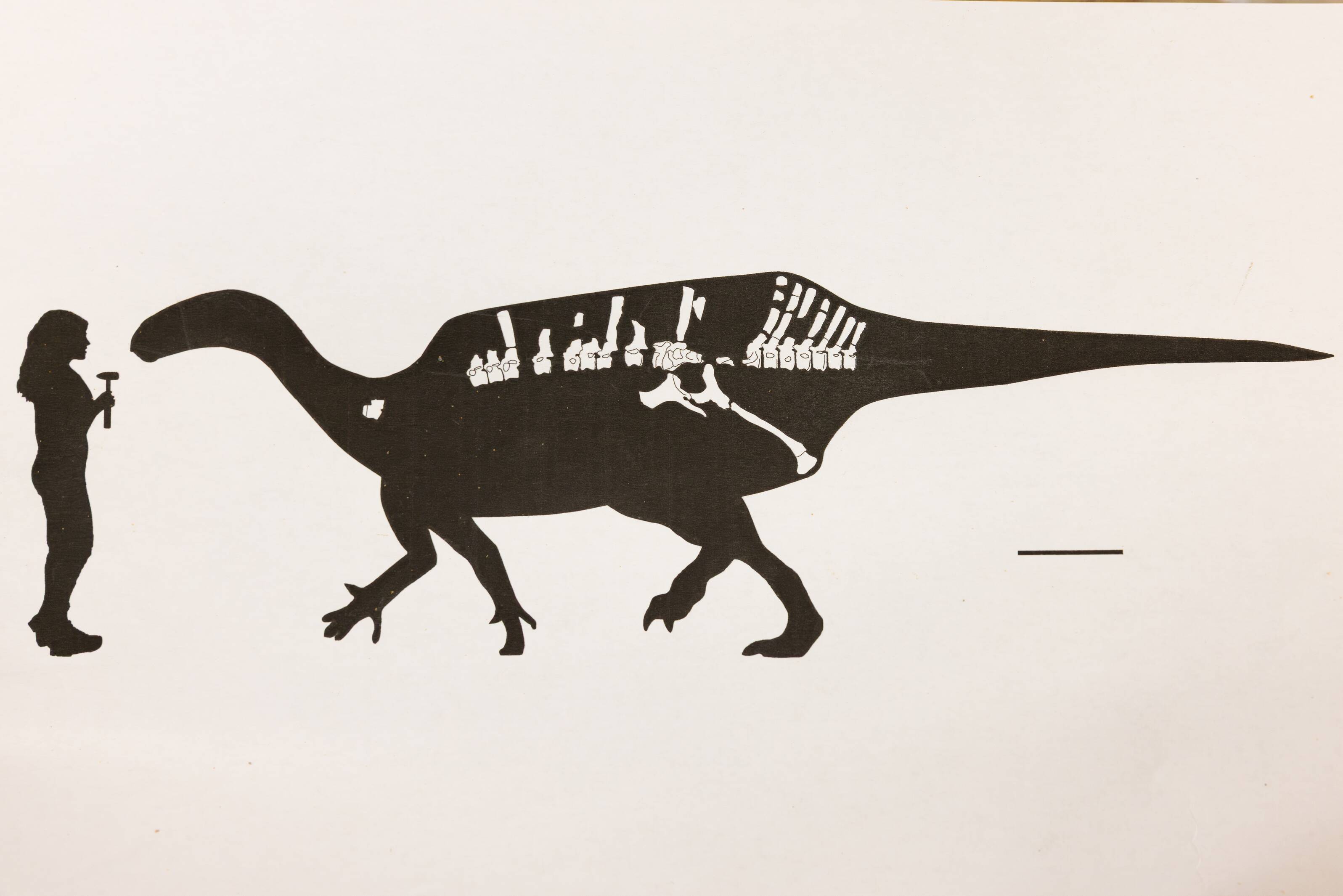
Speaking about his work, the Natural History Museum’s Professor Susannah Maidment, who is part of the team studying the fossils, commented that “Jeremy's careful study of fossils that have been in museum collections for several years has brought to life the iguandontian dinosaurs of the Isle of Wight. His work highlights the importance of collections like those at Dinosaur Isle, where fossil specimens are preserved in perpetuity and can be studied and revised in the light of new data and new ideas about evolution.”
"Over the past five years, Jeremy has single-handedly quadrupled the known diversity of the smaller iguanodontians on the Isle of Wight, and Istiorachis demonstrates we still have much to learn about Early Cretaceous ecosystems in the U.K."
Istiorachis appears to highlight an important evolutionary trend in iguanodontians. It seems elongation of neural spines in these animals started in the Late Jurassic era, before they became a pretty common feature during the Early Cretaceous. However, what is called true hyper-elongation, where spines stretched more than four times the height of the vertebral body, is still very rare.
The study is published in Papers in Palaeontology.