


 Nature
 PUBLISHED


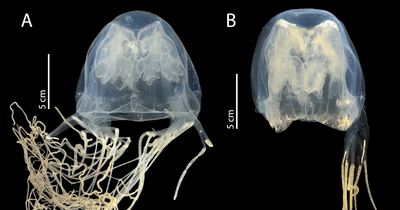


During a recent research trip, scientists at Tohoku University and the National University of Singapore discovered an entirely new species of box jellyfish, one of the most venomous creatures on Earth. Although it may look like others from the same genus, genetic analysis has revealed it to be genetically distinct.
Box jellyfish, also known as "sea wasps," are an infamous invertebrate of the group Cubozoa. Carnivorous, they use long, delicate tenacles to stun and kill prey, such as small fish and shrimp. However, in some species, these tentacles are highly venomous, making the jellyfish one of the deadliest creatures in the world. Their toxins attack the heart, skin, and nervous system and can cause humans to go into shock if they make contact with them. Given that such encounters typically occur in deep water, these people can easily drown, if they don’t die from heart failure in the first place.
These creatures mostly live in the warm coastal waters off Northern Australia and across the Indo-Pacific, but unlike other jellyfish, these 3-meter (10-foot) blue blobby beasties can swim under their own power.
The new species of box jellyfish identified is called Chironex blakangmati (C. blakangmati). Morphological analysis of the jellyfish reveals unique features that are not seen in other Chironex jellyfish.
The team collected various Chironex jellyfish along the coastal waters of Singapore’s Sentosa Island – what has historically been called “Pulau Blakang Mati” or “Island of Death Behind”. This ominous name has now been applied to the new jellyfish.
"C. blakangmati looks remarkably like Chironex yamaguchii - a jellyfish species I first discovered in Okinawa while doing my master's degree there," Professor Cheryl Ames, Tohoku University and WPI-AIMEC Unit Leader, explained in a statement.
"But we realized they were completely distinct. I actually went back to dust off an old sample of C. yamaguchii I still had in storage in Okinawa to help with the comparisons!"
Until now, these two jellyfish were believed to be the same species. But they are genetically distinct, and the team has identified physical traits that can help tell them apart without needing to conduct molecular analysis first. The main difference they identified is related to the way Chironex jellyfish propel themselves through the water.
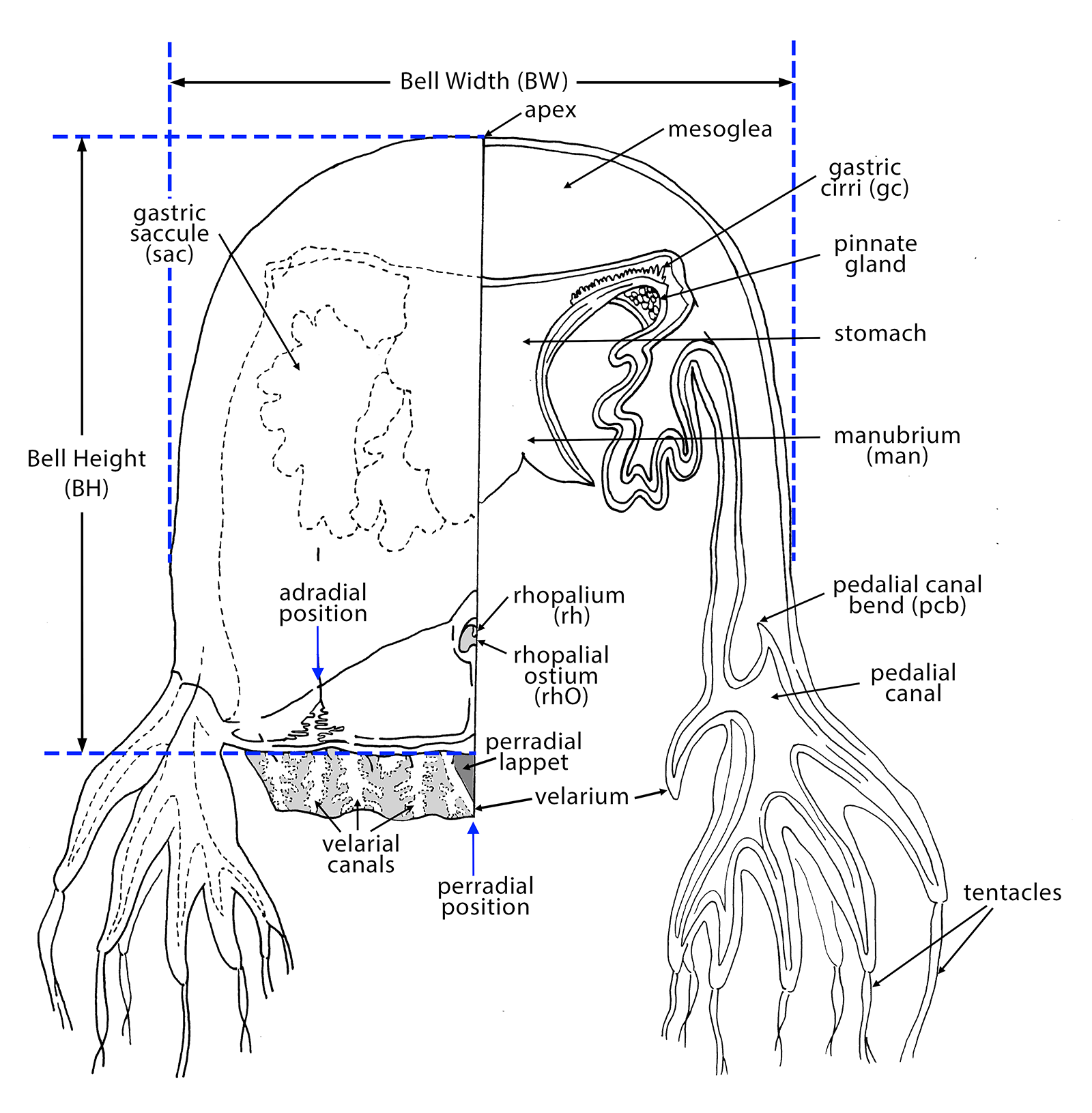
At the bottom of the bell-shaped body of these jellyfish is something called the “perradial lappets”, which reinforce the hinged musculature flat that pulsates to move them through the water. The three known species of Chironex jellyfish have pointed canals that extend from the tips of the perradial lappets, while the C. blakangmati- the new species – doesn’t have them at all.
"Our thorough review and analysis of all the Chironex species known to date reveal a lot about these box jellyfishes, and highlight a new, helpful strategy that other researchers can use for species delineation," Danwei Huang, Lee Kong Chian Natural History Museum, Faculty of Science, National University of Singapore, added.
In addition to identifying this fourth species of Chironex jellyfish, the team also found examples of C. indrasaksajiae. This species is usually seen in Thai waters but has been spotted in Singapore for the first time during this study.
"We were surprised to find C. indrasaksajiae so far away from Thailand," Ames explained.
"Recording range expansions like these is really important, as we currently know so little about the biodiversity and spatial distribution of box jellyfish."
The paper is published in the Raffles Bulletin of Zoology.




 1
1