Health and Medicine
 PUBLISHED


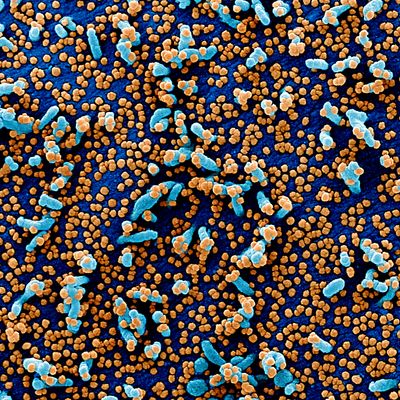


A highly mutated variant of the SARS-CoV-2 virus, which causes COVID-19, has been detected in a number of countries. The variant, called BA.3.2, was first detected in South Africa way back in November 2024, but new analysis reveals that it is spreading around the globe.
The BA.3.2 variant is notable for the number of mutations it has acquired compared with the COVID strains that are included in the most up-to-date vaccines. The new study estimates it has 70 to 75 substitutions and deletions in the genetic sequence of its spike protein, the key surface antigen that COVID vaccines target.
“BA.3.2 represents a new lineage of SARS-CoV-2, genetically distinct from the JN.1 lineages (including LP.8.1 and XFG) that have circulated in the United States since January 2024,” the new paper reads.
The worry is that variants that accumulate so many mutations may be better able to evade the immunity people have built up from prior vaccines and infections, possibly needing reformulated vaccines to combat them. The authors mention that lab experiments showed the most recent COVID vaccines were least effective against BA.3.2 compared with six other strains.
“[In] laboratory studies, the recently emerged BA.3.2 strain efficiently evades antibodies, likely because of spike protein mutations, highlighting the need for ongoing genomic surveillance and observational evaluations of vaccine and antiviral effectiveness.”
However, so far, scientists have not seen BA.3.2 rapidly overtaking other circulating strains: “[In] several European countries, BA.3.2 has cocirculated with various JN.1 descendant lineages with prevalences of approximately [10 to 40 percent].”
That said, it has been quietly making its way around the world. The paper explains that the variant has so far been detected in 23 countries across Africa, Asia, Europe, North America, and Oceania.
In the US, it’s been detected in wastewater samples from 25 states, as well as a handful of respiratory samples.
While this variant may not yet be cause for major concern, it bears remembering that COVID-19 is still having a serious public health impact, even six years on from the start of the pandemic. The Centers for Disease Control and Prevention (CDC) preliminary data for October 2025 to March 2026 estimates that there have been up to 10.4 million COVID-19 illnesses and between 12,000 and 35,000 COVID-19 deaths during this period.
According to the World Health Organization, the world has seen over 779 million reported cases of COVID-19 so far.
This is why scientists are not taking their eyes off this virus just yet, and why continued surveillance of this and future variants will continue.
“Robust surveillance data will continue to guide CDC’s preparedness, ensure timely responses to emerging SARS-CoV-2 variants, and guide decision-making on COVID-19 vaccine composition updates,” the authors write.
The study is published in the CDC’s Morbidity and Mortality Weekly Report.



 1
1