Health and Medicine
 PUBLISHED
 6
6


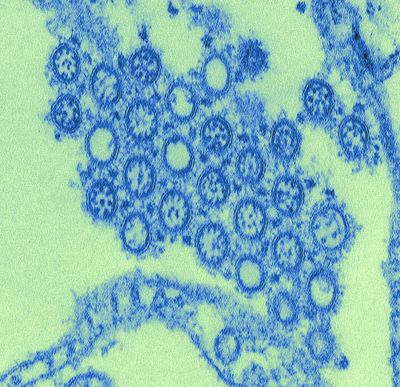


At any given time, somewhere in the world, it’s flu season. One of humanity’s oldest infectious scourges, influenza has caused devastating pandemics and countless deaths. It wasn’t until the mid-20th century that the first flu vaccine was developed – and now, we’re about to see a very 21st-century upgrade.
mRNA vaccines shot to public prominence during the COVID-19 pandemic, but scientists had been working on this technology for years prior. With the success of the COVID shots, attention has naturally turned to other infectious diseases, and influenza viruses – both the seasonal and pandemic variety – are a top candidate.
But Moderna’s new mRNA vaccine – just approved by the US Food and Drug Administration (FDA) for adults aged 50 plus – has had a rockier road than might have been expected.
A tale of mistrust and misinformation
The scientific consensus on mRNA vaccines is clear: according to a review published just weeks ago, they’re safe, effective, and extremely promising.
And yet mistrust still swirls around this research. Last year, US Health and Human Services (HHS) Secretary Robert F. Kennedy, Jr. announced a “coordinated wind-down” of mRNA vaccine development to the tune of hundreds of millions of dollars in canceled contracts.
In his statement at the time, Kennedy made claims that these vaccines are not effective against upper respiratory tract infections like flu. The scientific evidence says the opposite.
Kennedy is not the only US lawmaker to have expressed doubt about these vaccines. In February 2025, there was a hearing in the Montana state legislature on a bill that sought to outlaw mRNA vaccine use in humans.
It was littered with misinformation, including the false idea that the mRNA in these viruses can alter human DNA.
To be very clear, this cannot happen. mRNA cannot access the nucleus of the cell where the DNA is stored, nor can it integrate into DNA as the two molecules are not directly compatible. Once the mRNA has done its job, it is broken down and excreted with all the other cellular waste products.
That job is to teach the cell to produce a component of a virus that the immune system can respond to.
This is what sets mRNA vaccines apart from other vaccines like the MMR or traditional seasonal flu vaccines. These other types of vaccines usually contain either whole viruses, which have been weakened or inactivated, or important protein fragments.
In the mRNA vaccines, the difference is that you don’t actually include these fragments themselves, but the genetic instructions on how to make them.
Newer, faster, better
Moderna’s newly approved mFLUSIVA vaccine contains three RNAs, which each encode the hemagglutinin protein of one of two influenza A strains and one influenza B strain.
Hemagglutinin and another protein, neuraminidase, are the two flu surface proteins that help the virus invade human cells. They are used to identify strains of influenza A – if you’ve heard of designations like H5N1 or H1N1, the “H” is hemagglutinin.
Current seasonal flu vaccines are also targeted at hemagglutinin, but there are significant advantages to the mRNA approach.
One is that mRNA vaccines are quicker to produce. That matters when you’re dealing with viruses that mutate as readily as flu does – NBC News reports that Moderna’s vaccine can be produced in roughly half the time of a traditional shot, meaning updates can be rolled out more rapidly.
mFLUSIVA also outperformed traditional vaccines in clinical trials. Results published in May showed it was “superior to standard-dose licensed vaccines” and was comparable to enhanced flu vaccines that are used in vulnerable older adults.
Based on this, the FDA has now granted approval for its use in adults aged 50-65, and accelerated approval pending one more clinical trial in those aged 65 and up.
“The FDA approval of mFLUSIVA, our fourth approved product in the United States and the first mRNA-based flu vaccine, demonstrates the continued strength and versatility of our mRNA platform,” said CEO Stéphane Bancel in a Moderna press release.
"Flu remains a significant public health challenge, and mFLUSIVA provides an important new option for America's seniors.”
Coming soon to a pharmacy near you
We almost didn’t get here. At the first time of asking, back in February, the FDA rejected Moderna’s application for mFLUSIVA before a quick U-turn.
The initial reason given was issues with the clinical trial design – the then-director of the FDA apparently took issue with the use of the standard flu vaccine to compare the mRNA vaccine against, instead of the enhanced flu shot.
Vaccine trial design has been another contentious issue since Kennedy took office at HHS. He’s previously called for all new vaccines to be tested against a placebo, something that is not done for important ethical and logistical reasons.
Now, with the new approval, Moderna says their vaccine will start to arrive at some retailers very shortly, meaning some will have the option of receiving the world’s first mRNA seasonal flu vaccine this winter.
“The Food and Drug Administration’s approval of a new mRNA flu vaccine is welcome news and provides another important option to help protect people from a virus that sends hundreds of thousands of Americans to the hospital each year and claims thousands of lives,” commented Dr Ronald G. Nahass, President of the Infectious Diseases Society of America, in a statement.
“As we prepare for flu season, the most important message is simple: Vaccination saves lives.”