Health and Medicine
 PUBLISHED


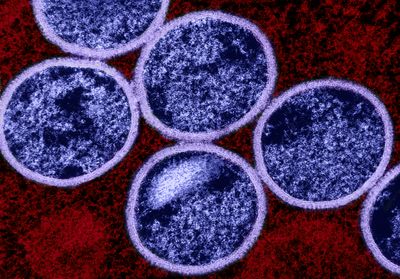


UK health authorities have identified a new strain of the mpox virus in an English individual who recently returned from travel to Asia. The strain, which has not yet been officially named, appears to contain elements of two other virus strains known as clade Ib and clade IIb.
Mpox, previously known as monkeypox, is a viral disease that starts with nonspecific symptoms like a fever and muscle aches, before a characteristic blister-like rash appears. The rash can affect any area of the skin as well as inside the mouth and throat, and it can be itchy or painful. It can also take up to four weeks to subside.
Though unpleasant, for many people this is as serious as the infection will get. However, in the very young, pregnant people, and those with a compromised immune system, the disease can be much more serious and even fatal.
Fortunately, there is an effective vaccine available. In the UK, it’s currently offered to those considered most at risk of catching the virus, including men who have sex with men, people who have multiple sexual partners, and those who participate in group sex.
“Although mpox infection is mild for many, it can be severe. Getting vaccinated is a proven effective way to protect yourself against severe disease, so please make sure to get the jab if you are eligible,” urged Dr Katy Sinka, Head of Sexually Transmitted Infections at the UK Health Security Agency (UKHSA), in a statement.
The sexual route has historically been a major route of transmission for mpox, especially the clade II viruses, but in recent years there’s been growing evidence that clade I viruses may transmit more readily through other routes, such as close household contact.
In August 2024, the World Health Organization (WHO) declared mpox a global public health emergency due to a rapidly spreading outbreak originating in the Democratic Republic of the Congo. Numerous neighboring countries reported cases, and the spread was not contained to the African continent.
This followed a previous outbreak in 2022, which over the ensuing months affected 110 countries, most of which had never previously seen cases of mpox.
The latest public health emergency was lifted in September 2025. WHO data published this month shows there have been almost 48,000 cases of mpox this year in 94 countries, and 201 deaths.
Genomic testing has shown that the newly identified strain in England contains some genetic material from both clade IIb and clade Ib mpox. Clade Ib began as a major outbreak in the DRC in 2023, and the WHO says it is currently “undergoing sustained human-to-human transmission in several countries.”
The fact that a new strain has been found is not necessarily a cause for major concern – recombining and swapping bits of their genetic material around is very on-brand for viruses – but it is something authorities will be keeping an eye on.
“It’s normal for viruses to evolve, and further analysis will help us understand more about how mpox is changing,” said Dr Sinka.


 1
1