Health and Medicine
 PUBLISHED


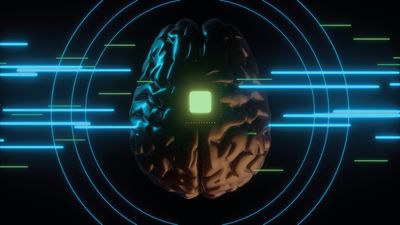


An update from Neuralink on its first in-human brain implant has revealed that the study hasn’t all been smooth sailing – part of the implant’s system of ultra-thin electrodes has experienced a problem.
The N1 device was surgically implanted into 29-year-old Noland Arbaugh earlier this year, as part of the company’s goal to create a brain-computer interface capable of allowing humans to control devices with their minds alone.
The implant itself consists of over 1,000 electrodes combined into 64 thinner-than-human-hair “threads” designed to channel signals from neurons. The flexible threads were surgically attached by a robot to the brain’s motor cortex, the region of the brain that’s involved in voluntary movement.
It’s these threads that were the source of the problem.
“In the weeks following the surgery, a number of threads retracted from the brain, resulting in a net decrease in the number of effective electrodes,” said Neuralink in a blog post. As a consequence, the study’s task involving controlling a computer’s cursor with only the mind took a hit to its speed and accuracy, measured in bits per second (BPS).
Though the Wall Street Journal reported that Neuralink did consider removing the implant, it’s a problem that the company says has now been overcome by making changes to the algorithm involved in the recording of neural signals and how these signals are then translated into cursor movements.
According to Neuralink, these alterations led to a “rapid and sustained improvement in BPS, that has now superseded Noland’s initial performance.”
The implant’s capabilities were first shown off to the wider public back in March, when Arbaugh participated in a livestreamed demonstration on social media platform X. During the stream, Arbaugh, who is paralyzed from the shoulders down, was able to control a cursor in order to play a game of chess.
"I love playing chess, so this is one of the things that you all have enabled me to do. I wasn't able to really do much the last few years, especially not like this," said Arbaugh at the time. "I had to use my mouth [device], but now it's all being done with my brain."
Neuralink founder Elon Musk likened the action to “telepathy”.
However, the research has not been without controversy. Shortly after it received approval from the US Food and Drug Administration (FDA) to carry out human trials, Neuralink’s animal research facility became the subject of a federal investigation that uncovered numerous problems.