Space and Physics
 PUBLISHED
 4
4




Time passes at different rates for different observers, depending on their relative speeds and their proximity to (and strength of) nearby gravitational fields. This doesn't normally figure into your everyday calculations. If you want to meet someone next Tuesday, you don't need to worry about your clocks being all that different – unless, in the intervening days, one of you spends that time flying around at relativistic speeds, or on a planet or moon with vastly different gravity.
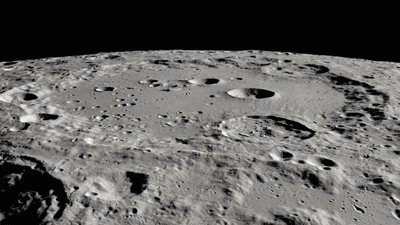
This is a problem for NASA and other space agencies, however, as humanity increases its activity on the lunar surface once again, with a goal of eventually establishing bases on the Moon.
Currently, there is no agreed time zone on the Moon. Uncrewed missions generally use the time corresponding to the craft's country of origin, while the crewed Apollo missions used Ground Elapsed Time (GET), counting from the moment of launch. As the Moon becomes more full (of robots, and then, fingers crossed, humans) this could pose some problems that the US hopes to overcome by establishing a Coordinated Lunar Time.
Following a directive from the White House in April, NASA is pressing ahead with plans to create the lunar time zone. They plan to determine the time using a weighted average of atomic clocks placed on the Moon, though where these clocks should be placed is still a subject of analysis at NASA. The team is also looking into what mathematical model would be best suited for establishing the coordinated lunar time.
Attempting to estimate the difference in ticks between the Moon and the Earth, recent work has found that time on the lunar surface ticks by at 0.0000575 seconds faster than on the surface of the Earth per day, though other estimates have come up with slightly different figures. For ease of calculation, it would take around 100,000 days (or about 274 years) for someone on the Moon to age 5.75 seconds more than somebody on Earth. That might not sound like a lot, but it could be a nightmare for space missions.
“For something traveling at the speed of light, 56 microseconds is enough time to travel the distance of approximately 168 football fields,” Cheryl Gramling, lead on lunar position, navigation, timing, and standards at NASA Headquarters in Washington explained in a statement. “If someone is orbiting the Moon, an observer on Earth who isn’t compensating for the effects of relativity over a day would think that the orbiting astronaut is approximately 168 football fields away from where the astronaut really is.”
Which, if you're trying to co-ordinate a lift home, would be somewhat less than ideal.