Space and Physics
 PUBLISHED


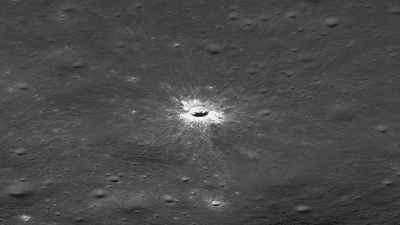


NASA’s Lunar Reconnaissance Orbiter (LRO) has orbited the Moon for 17 years, mapping its surface with unprecedented precision. The Moon has no winds or flowing water, but it does change under the effects of cosmic events. Impacts from other space objects are among them, and now LRO has caught the biggest of its career: the largest fresh impact crater on the Moon ever found.
The new crater is located on the Moon’s eastern edge and was formed by something NASA described as the size of a three-to-six-story building hitting the Moon sometime between April 11 and May 22, 2024.
It measures about 222 meters (728 feet) across and 43 meters (141 feet) deep. For comparison, that's roughly two American football fields long. For non-Americans, Rome’s Colosseum is 189 meters on its widest axis and 48 meters tall, so it would fit quite comfortably in this new lunar feature.
It is officially named McGetchin after pioneering lunar scientist Tom McGetchin. Before this new impact, the largest crater found to have formed during the LRO mission had a diameter of 70 meters (230 feet).
This discovery is tremendously exciting. Models based on the famous Neukum crater production function suggest a crater of this diameter happens only once in every 132 years. The object that formed the crater was either an asteroid or a comet – and we're lucky it didn't hit us.
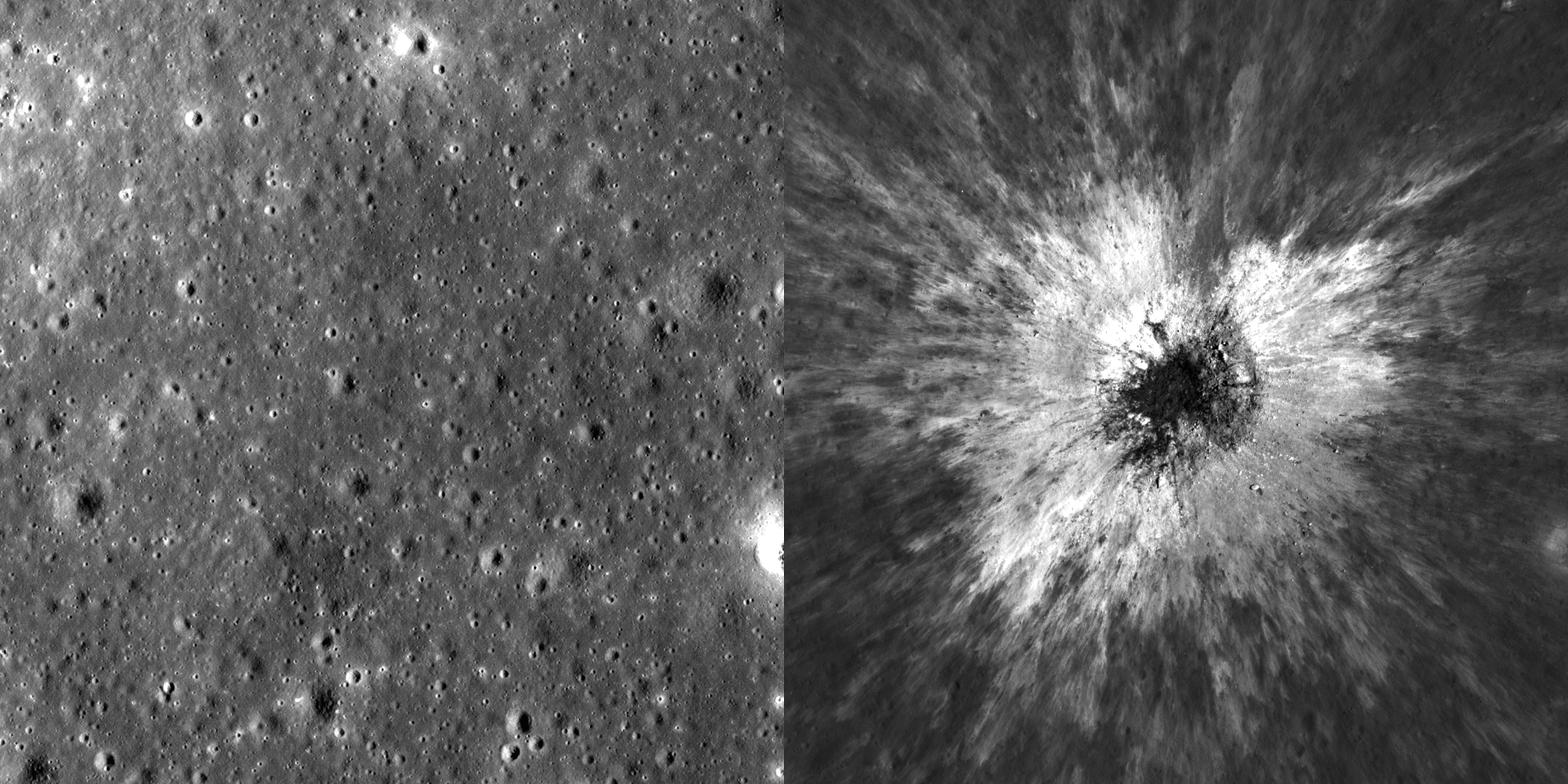
The new crater was spotted by Robert Wagner, an image-processing specialist from Intuitive Machines who works with data from the Lunar Reconnaissance Orbiter Camera (LROC) system. Close-up images of McGetchin immediately show just how much regolith (the lunar soil) was shifted by just this one impact.
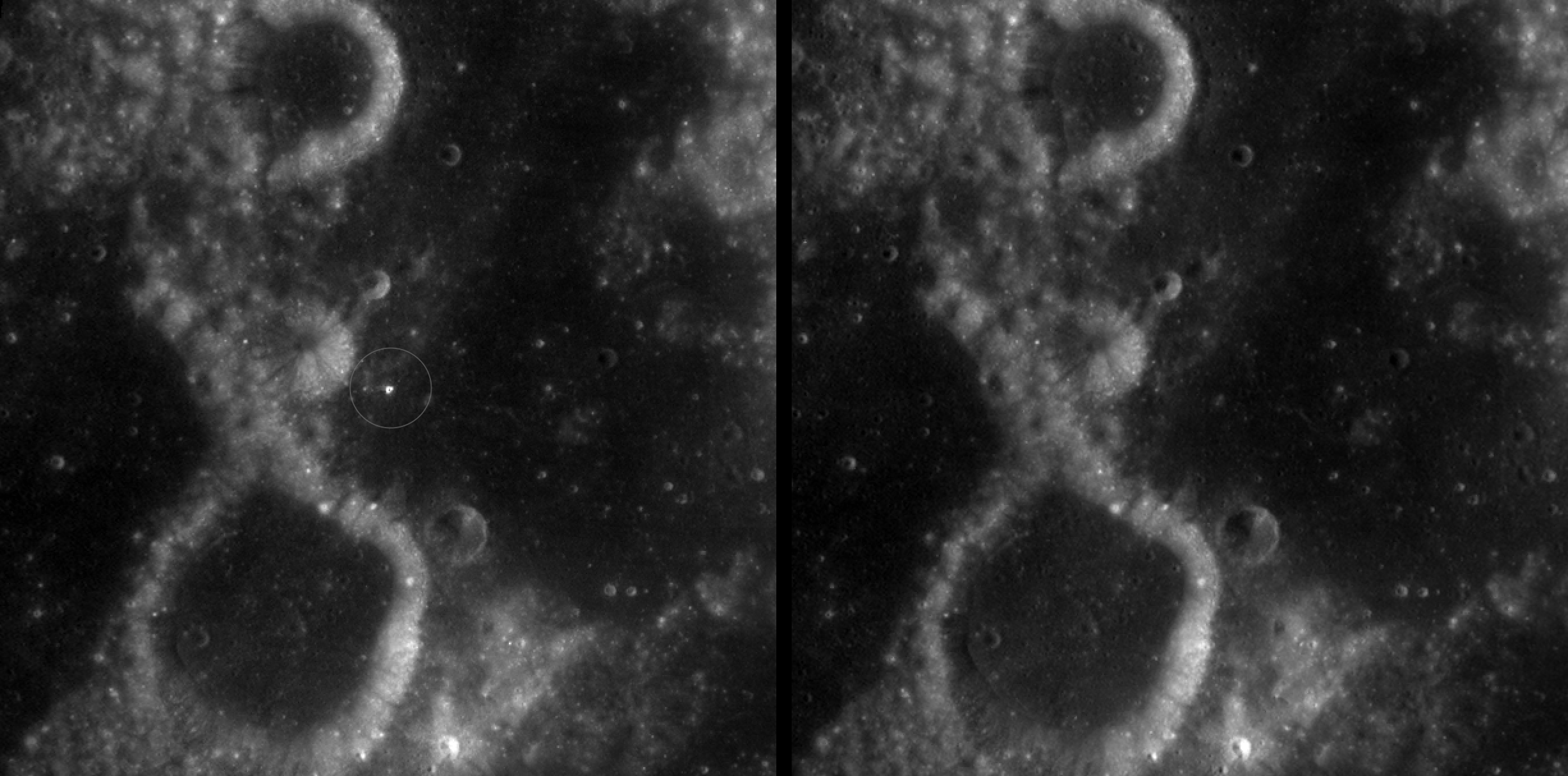
His discovery was not actually in one of those close-up views. But when you know what to look for, you easily spot the changes.
“It was by far the most obvious impact debris pattern I’ve ever seen in one of these images,” Wagner said in a statement. “I just stopped, dropped everything, and started looking into what that spot was.”
The study announcing the crater is not the only piece of research that has come out on McGetchin Crater. A second piece of work has shown something unknown about the new crater from the LRO camera images alone: the surrounding area is colder than average by several degrees during the 14-day lunar night.
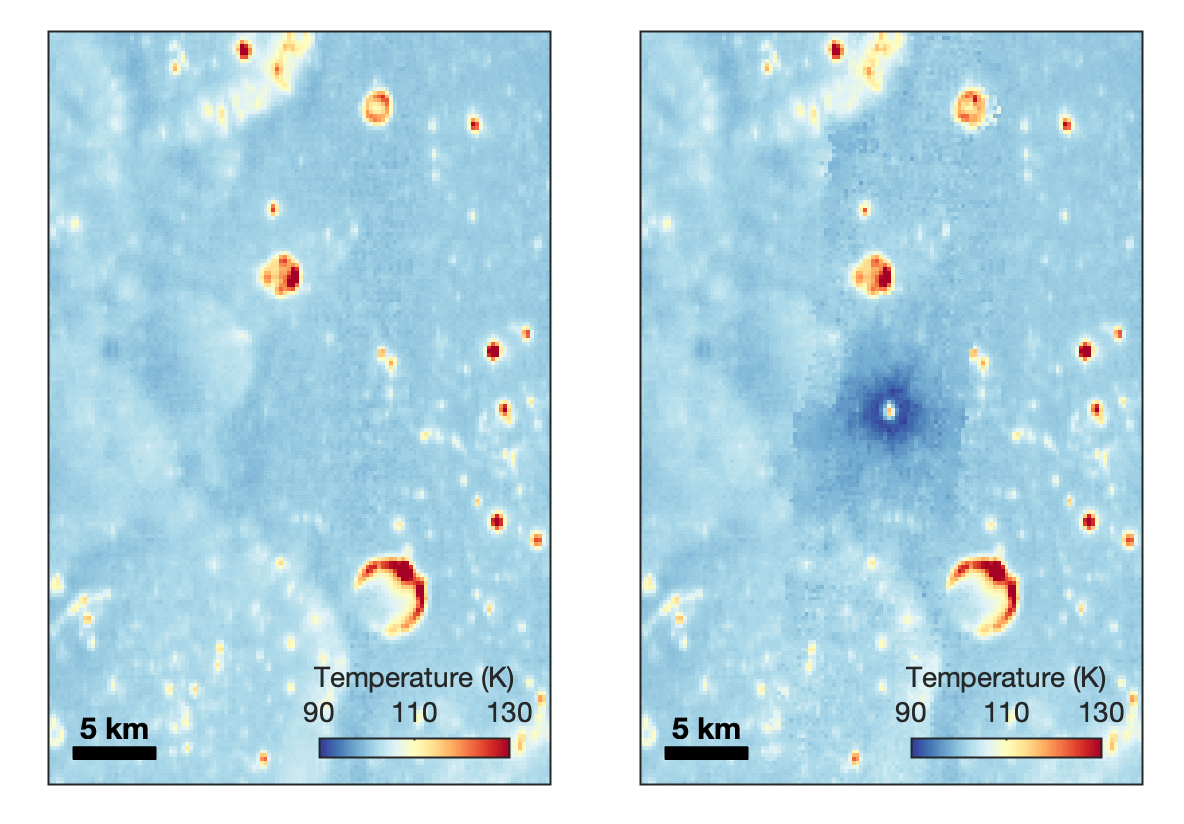
Using LRO's thermal imaging instrument, they found the area 6.4 kilometers (4 miles) surrounding the crater is 16°F colder at night than its surroundings.
The team believes this happens because of the impact fluffing up the regolith. Until it compacts again, the regolith in the area is less dense, so it is less able to retain the heat experienced during the 14-day lunar day.
The cold spot is significantly larger than the crater, which raises important concerns about safely traveling across the Moon. There might be areas where the soil is less dense than expected due to impacts; a very important piece of information to have if we truly want to return to the Moon to stay.
Both studies are published in the journal Science Advances and are available here and here.