Space and Physics
 PUBLISHED
 1
1


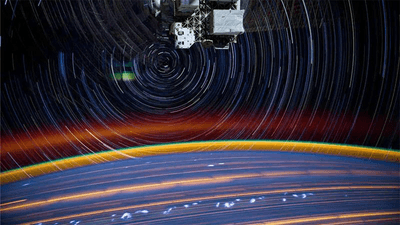


Astronaut and keen astrophotographer Donald Pettit has shown off a stunning image he took from the International Space Station (ISS) that "cannot be taken anymore".
A question that comes up every now and then, is why stars are not visible in photographs taken from the ISS. Though there are photos that display stars in the background, a lot of photos show nothing but darkness behind the Earth.
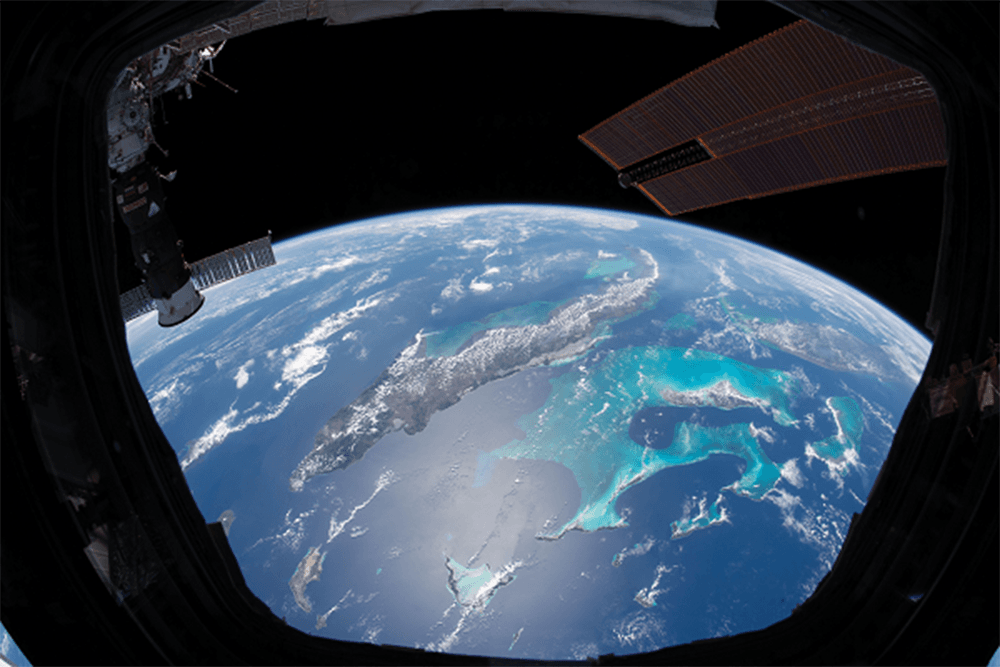
It is natural to assume that the stars should be more visible from space, without our atmosphere interfering with the light. This is the case, and the distortion of our atmosphere is why we keep sending our telescopes into space.
But actually photographing stars, as anyone who has tried from Earth knows, requires you to lengthen your exposure time in order to get enough light. During this time the camera must remain pointed precisely at the space object you are trying to capture.
This used to be possible onboard the ISS, as highlighted in a photograph taken by Pettit during a stay on the space station in 2003, containing green airglow from atomic oxygen in the Earth's atmosphere, and a whole host of stars.
"At this time Space Station’s orbital attitude was a solar inertial attitude (XPOP) that allowed the solar panels to point towards the sun without any tracking (solar tracking was not added to ISS until much later)," Pettit explained in an Instagram post. "Essentially, the station itself was the tracking mechanism thus for a camera mounted to Space Station, a time exposure yielded stars as pinpoints."
Unfortunately for fans of seeing images of space taken from space, since 2006 the ISS has adjusted its angle, with one side remaining pointing towards Earth. Pettit took the above photograph using a 30-second exposure, but now such an exposure would just give you stars as arcing trails.
Though the inclination of the ISS limits star images to less than half a second, Pettit plans to take a tracking device to compensate for the motion of the space station in an upcoming trip. With more advanced cameras also available, we should hopefully get more star field images upon his return to the space station.