Nature
 PUBLISHED


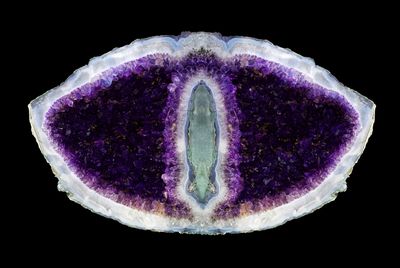


Northern Uruguay is home to one of the largest amethyst deposits in the world – but their formation has long been a mystery. Using cutting-edge techniques, researchers are unraveling their origin story and have discovered that these stunning gems crystalized at surprisingly low temperatures.
Amethysts are a type of quartz, recognizable by their striking violet hue. The gemstones are an important economic resource in Uruguay, home to the Los Catalanes mining district–a deposit so significant it has been recognized as one of the “First 1000 IUGS Geological Heritage Sites” by the International Commission of Geoheritage (IUGS). According to the IUGS, the deposit is “unique” because of its high number of mega-geodes and vast reserves as well as the gemstone quality and variety.
Amethyst geodes (some over 16 feet high!) are located in cooled lava flows. These ancient lava flows can be traced to the breakup of the supercontinent Gondwana some 134 million years ago. Mining began in northern Uruguay over 150 years ago and continues to be an important industry today. However, because not much is known about their origin, it can be hard to find new geodes and much currently depends on miners’ experience.
To find out more, researchers carried out a series of geological surveys analyzing geode minerals, groundwater and geode-hosted water in over 30 mines. The study involved high-tech techniques including nucleation-assisted microthermometry (to examine small fluid-filled pockets in the rocks) and triple-oxygen-isotope geochemistry (to analyze oxygen atoms in minerals).
“The precision and accuracy of these new techniques allowed us to estimate with confidence the temperature and composition of the mineralizing fluids,” Fiorella Arduin Rode, lead author and PhD researcher at Göttingen University’s Geoscience Centre, said in a statement.
“Our findings support the idea that these amethysts crystallised at low temperatures from groundwater-like fluids.”
The results show that the amethyst geodes were formed at temperatures between 15 and 60°C (59°F and 140°F) – a surprisingly low temperature, the researchers say. This suggests the amethyst formed once the lava had cooled.
What’s more, the results reveal the mineralizing fluids had low salt concentrations. The isotope content also suggests the water came from the natural weather cycle. The researchers believe it likely originated from groundwater contained in rocks close by.
Knowing this could help find more of these impressive crystals in the future.
"Understanding the conditions for amethyst formation — such as the temperature and composition of the mineralising fluid, as well as the silica source, the timing of the mineralisation, and its relationship with the host rocks — is crucial for unravelling the process,” said Rode.
“This could significantly improve exploration techniques and lead to sustainable mining strategies in the future.”
The study is published in the journal Mineralium Deposita.