Nature
 PUBLISHED
 5
5

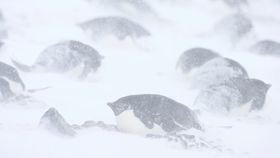


On the Long Peninsula in eastern Antarctica lies a massive, ancient graveyard that tells the story of what climate change could look like in the future. Buried beneath layers of sediment are hundreds of mummified Adélie penguins that died out in two mass events over the last 1,000 years.
Publishing their work in the Journal of Geophysical Research: Biogeosciences, researchers have learned that both events – one 750 years ago and the other 200 – were caused by heavy snow or rainfall over multiple decades that contributed to flooding, erosion, and a loss of suitable nesting habitat for the penguins. Now, the conditions that caused these last two die-offs are likely to become more common because of climate change.
For 3,900 years, Adélie penguins have only lived in Antarctica. Scientists carbon dated the ages of the penguin mummies they found, most of which were chicks, as well as sediments, feces, and nesting materials, all of which indicated a shift in the Southern Annular Mode – a wind pattern in the Southern Ocean that blows wet air to East Antarctica – was likely responsible for the mass mortality event.
This wet air caused an increase in precipitation. Penguin chicks lack the down feathers needed to survive extreme colds, and with increased rainfall, they can get sick, hypothermic, and ultimately die. As well, snow makes it difficult for parents to find pebbles or suitable habitats for their nests, and if it melts it can drown their eggs.

Today, nearly one-third of the birds (Pygoscelis adeliae) live in the region of Long Peninsula with around 45,000 breeding pairs in the summer at around 250 sites, forming large colonies along the coast. But climate change could make a shift in the Southern Annular Mode all the more likely, further threatening penguin species.
“The recent climate trend in Antarctica, including enhanced [weather] patterns and increased precipitation, suggests that the risk of penguin mortality events is likely to increase,” wrote the authors.

A third mass mortality event occurred in more recent years during periods of incessant rain and snowfall during 2013 and later in 2017 when just two of about 40,000 penguin chicks survived.
Despite their tumultuous past, Adélie penguins have since seen their population numbers rise.