Nature
 PUBLISHED




This article first appeared in Issue 14 of our free digital magazine CURIOUS.
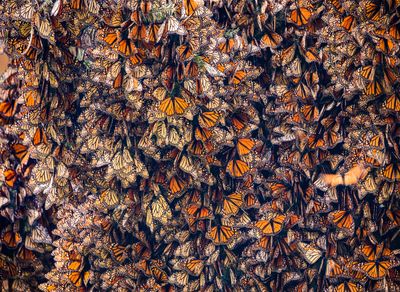
Monarchs are the only butterfly species known to make an annual two-way migration like birds, with a round-trip distance of around 8,000 kilometers (5,000 miles). Many have wondered how a small insect could survive such a journey, but a recent study published in PLOS ONE has suggested that it may come down to wing color.
Researchers from the University of Georgia and New Mexico Tech analyzed the wings of nearly 400 wild monarchs, collecting them at different stages of their migration and measuring their color proportions. The results showed that the monarchs that migrated successfully tended to have less black and more white pigment on their wings.
“We undertook this project to learn how such a small animal can make such a successful long-distance flight,” said lead author Andy Davis, an assistant researcher in UGA’s Odum School of Ecology, in a statement. “We actually went into this thinking that monarchs with more dark wings would be more successful at migrating because dark surfaces can improve flight efficiency. But we found the opposite.”
Subscribe to our newsletter and get every issue of CURIOUS delivered to your inbox free each month.
The authors suggest that as the coolness of the large white spots contrasts with the black along their wing, it may create miniature eddies that give the butterflies a boost by reducing drag. As for why the monarchs developed this coloring in the first place, it’s proposed that sunlight exposure could play a role.
“The amount of solar energy monarchs are receiving along their journey is extreme, especially since they fly with their wings spread open most of the time,” Davis explained. “After making this migration for thousands of years, they figured out a way to capitalize on that solar energy to improve their aerial efficiency.”
CURIOUS magazine is a digital magazine from IFLScience featuring interviews, experts, deep dives, fun facts, news, book excerpts, and much more. Issue 17 is out now.