Space and Physics
 PUBLISHED


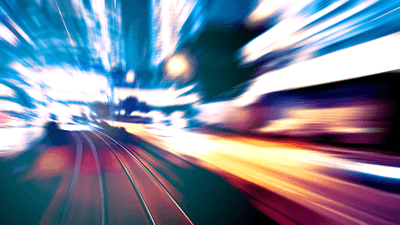


Light, when it isn't being slowed to an embarrassing 61 kilometers per hour (38 miles per hour) by scientists using supercooled sodium and lasers, is famously pretty zippy, whizzing along as it does at 299,792 kilometers per second (186,000 miles per second) – the absolute speed limit of the universe, as far as we can tell so far.
Within a medium, such as a Bose-Einstein Condensate (BEC) as above, or water, it is possible to slow down light, and even exceed the speed at which it travels within those mediums. But what would happen if the speed of light were to slow down substantially?
That's a pretty difficult question to answer. The speed of light is less about photons whizzing along, and more about the conversion factor that ties together space and time, and energy and mass. If the value of C became significantly lower, then there would be a whole lot less energy available in the universe, according to probably the most famous equation in physics E = mc2. Mess around with the speed of light, and everything in the universe gets messed up, not just the time it takes for light to travel to us from the Sun, for example.
On the other hand, if we ignore those aspects you can have a pretty good look at the concepts of red and blue shift, something you don't get to experience without some impressive pieces of telescopic equipment. As well as this, and a lot more of a nightmare, you would get to experience the odd effects that take place at or near light-speed, if you were handily able to catch up with it in your Volvo.
There's a certain sci-fi series, which we won't name for reasons of spoilers, which explores this latter concept pretty well. For those of you who like to read sci-fi and have not come across a book where the speed of light could get lowered, we'd suggest skipping the next few paragraphs, in fact.
For those that remain, in that particular book, the speed of light is deliberately lowered within a certain region of space. Two characters are separated within an alien solar system, on separate planets, when this devastating change occurs.
The problem is that the closer you get to the speed of light, the more time slows from an outside observer's perspective. In the books, this is true even though the speed of light is slowed down to a crawling pace, resulting in a twin paradox if one character is to move at very achievable speeds. Go for a jog in a slowed-light universe, and you might find that your lazy friend who stayed home has aged horribly in the interim, while you remain your youthful, sweaty self.
In the books, the characters are doomed never to meet, as using a spacecraft to fly to the other planet would result in extreme time dilation, and the character who remained "still" would age and die before the other could get to them.
Red shift and blue shift would also be quite interesting to see. In essence it is similar to the Doppler effect, which you are probably quite familiar with, even if you don't know it by name.
"The linear version of the doppler effect is familiar to most people as the phenomenon that occurs as the pitch of an ambulance siren appears to rise as it approaches the listener but drops as it heads away," Dr Marion Cromb explained in a statement accompanying a 2020 study. "It appears to rise because the sound waves are reaching the listener more frequently as the ambulance nears, then less frequently as it passes."
We have a helpful (and human) explainer on this concept if you are interested in learning more, but switch this for wavelengths of light, and add in that wavelengths of light can be stretched by the expansion of the universe, and you have the basic concept of red and blue shift. If something is moving away from you it looks redder; if something is moving towards you, it will look bluer.
This is not noticeable to anyone without a significant piece of equipment, explaining why we did not learn about redshift, and subsequently the expansion of the universe, until Edwin Hubble's discoveries in 1929. But in 2012, for educational purposes, MIT put together a nice little game to demonstrate this effect, as well as several other effects, by artificially lowering the speed of light in the videogame A Slower Speed of Light.
"A Slower Speed of Light is a first-person game prototype in which players navigate a 3D space while picking up orbs that reduce the speed of light in increments," the game's creators explain on the MIT website.
"These effects, rendered in realtime to vertex accuracy, include the Doppler effect (red- and blue-shifting of visible light, and the shifting of infrared and ultraviolet light into the visible spectrum); the searchlight effect (increased brightness in the direction of travel); time dilation (differences in the perceived passage of time from the player and the outside world); Lorentz transformation (warping of space at near-light speeds); and the runtime effect (the ability to see objects as they were in the past, due to the travel time of light)."
As explained above, actually lowering the speed of light is as inadvisable as it is impossible (at least, without some fairly major physics breakthroughs we couldn't even begin to speculate on). But the game gives you a pretty good look at some weird effects from physics, and is available to play around with on most operating systems.