Health and Medicine
 PUBLISHED



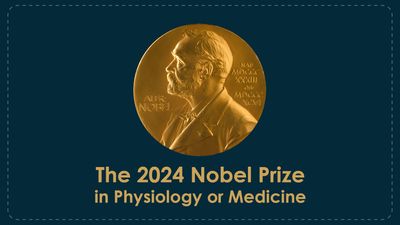


The winners of the 2024 Nobel Prize in Physiology or Medicine are Victor Ambros and Gary Ruvkun for their discovery of microRNAs, tiny molecules that help regulate the expression of genes. The prize is worth 11 million Swedish kronor (around $1,060,000 USD at the time of publishing), which will be shared equally between the winners.
The award recognizes how these scientists discovered peculiar exceptions to the standard rules of gene regulation. These anomalies, discovered together by Ambros and Ruvkun, were called microRNAs, and thousands of these molecules are now known to science.
MicroRNA molecules help control a variety of processes. Some of the processes are not just normal, but fundamental for the healthy working of living bodies. However, there are also ways in which these molecules can lead to disease.
In the first camp, embryonic development, blood cell differentiation, and muscle function appear to be affected by microRNAs. On the pathological side, there is hereditary progressive hearing loss, congenital heart disease, some viral infections, and certain cancers like lymphoma and leukemia. MicroRNAs are also believed to play a role in plant development and gene expression in viruses.
MicroRNAs are very common in many mammalian cell types, and they appear to target over a third of the genes of humans and other mammals. Many of these microRNAs have remained unchanged for hundreds of millions of years, conserved since at least the common ancestor of mammals and fish. This suggests that they have important biological functions, persisting through evolutionary changes.