Space and Physics
 PUBLISHED





With up to 10,000 bits of space rock raining down on Earth every single year, the vast majority of meteorites splash down into the oceans.
But every so often one will make a notable landing, and with roughly 1.5 billion cars buzzing around the planet, very occasionally that place will be a car.
To date, there are three known cases of a hunk of space rock crash-landing into a car, and one that got pretty close.
An extraterrestrial payday
One of the best documented cases of a meteorite hitting a car is the Peekskill meteorite.
On the night of October 9, 1992, thousands of people across the East Coast of the United States of America watched as a “huge greenish fireball” streaked through the sky. One observer described the noise of its descent as a “crackling sound like that of a sparkler”.
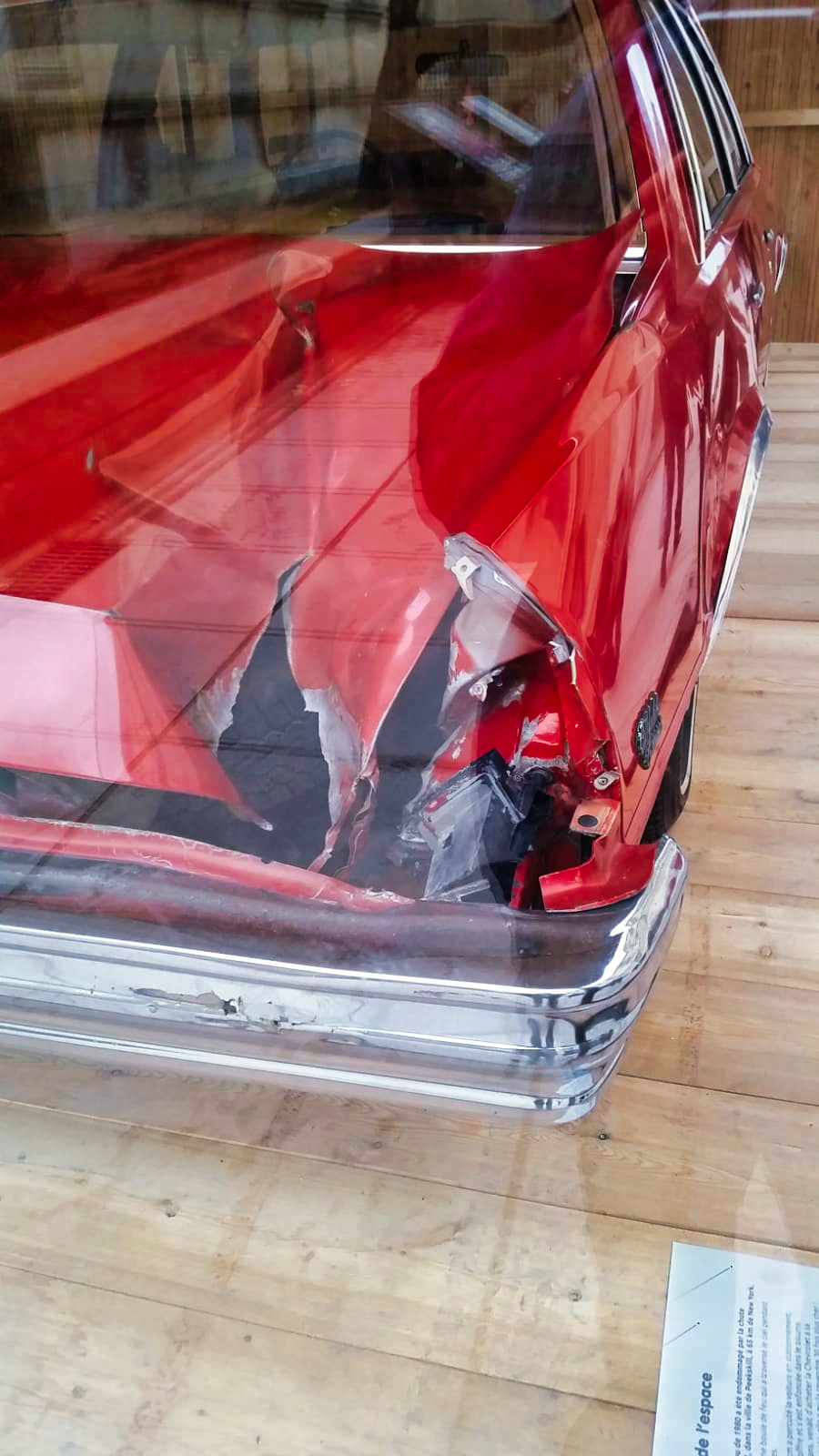
Caught on 16 separate videos, it crashed down into Peekskill, New York, where at approximately 7:50 pm EDT it smashed into a parked Chevy Malibu.
At a speed of 322 kilometers (200 miles) per hour, it sliced through the trunk of the car, narrowly missing the fuel tank. The 12-kilogram (26-pound) meteorite came to a stop in a crater beneath the Chevy.
Hearing what she thought was a crash outside her house, the owner of the car, Michelle Knapp, rushed out before calling the police. According to reports, it was initially logged as an act of “vandalism” before a neighbor made the rather astute observation that they weren’t sure any person could throw a rock so hard it literally cuts a car in two.
Having just bought the Chevy for $400, Knapp subsequently sold it to a meteorite collector for a reported $25,000. Not bad for a night's work.
The fact that the meteor was seen by so many people and caught on multiple videos means that scientists have been able to retrace the path the meteorite took to land on Knapp's car. This level of documentation is exceedingly rare and makes it only the fourth meteorite in history for which there is a known orbit.
The Peekskill meteorite turned out to be something known as a H6 monomict breccia. This means it is a high-iron chondrite, made up of a single material that consists of fragments cemented together.
But this wasn’t the first time a bit of space rock has hit a car.
The first time a meteorite hit a car
This time, the event took place in the small town of Benld, Illinois.
On September 29, 1938, a man named Ed McCain went into his garage to start up his Pontiac car when he noticed that there was a hole in the back seat.
Calling his neighbor round, he initially complained about destructive rats, before the neighbor noticed a hole in the roof and, using wire clippers, they subsequently extracted a meteorite from the actual seat.
While no one saw it happen, it has been possible to recreate what happened.
It seems like the meteorite smashed through the roof of the garage and then through the roof of the parked Pontiac. It carried on through the backseat of the car, where it then hit the muffler underneath the vehicle. Here, it actually bounced back upwards and got caught in the springs of the seat, where it lodged.
So even though it wasn’t witnessed, making it technically a find rather than a fall, it was the first ever known to hit a car.
A 4.6-billion-year-old vandal
But with more cars now than in 1938, you might think it must have happened more recently. And you’d be right.
On September 25, 2009, a meteor was spotted streaking across the sky of Grimsby just to the west of Lake Ontario, Canada. Scientists were keen to get their mitts on anything that might have survived the rapid descent and released pictures, video, and a map of possible landfall locations.
It was only then that things clicked into place for Yvonne Garchinski. The day after the meteor, her son had found their SUV with a smashed windscreen and rock still resting on the car’s hood. Assuming, once again, that it was vandalism, he’d filed a police report and thought not much more of it.
After seeing the news, Garchinski realized what had happened and got in touch with the scientists to hand over the golf ball-sized meteorite. It turned out to be what is known as an ordinary chondrite, although estimated to be 4.6 billion years old it doesn’t feel that ordinary.
I’m not sure the insurance would cover it, either.
A near miss in Winchcombe
Hopping over to the other side of the Atlantic, and in 2021 another meteorite got pretty close to being the fourth to hit a car.
It was February 28, when the UK Fireball Alliance spotted a meteor hurtling over the UK. Using their system of cameras, they could track its path and pinpoint its landing zone to be northern Gloucestershire.
While sitting in their home, the Wilcock family heard a strange sound outside, but didn’t go out to investigate until the morning. What they found was a dark black smudge across their driveway.
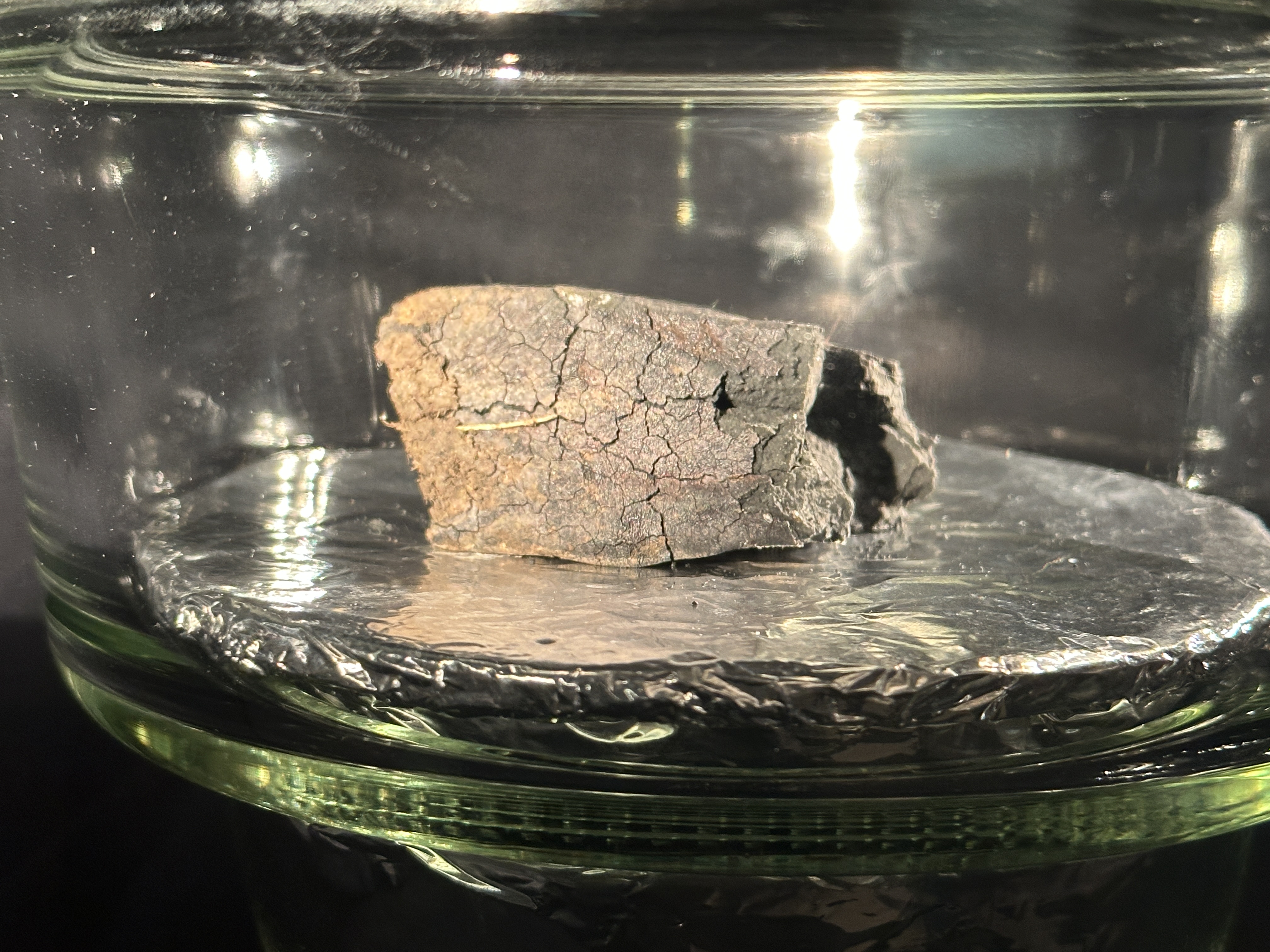
Recovering 319 grams of material, they sent it to London for analysis. It was found to be a carbonaceous chondrite, and due to the speed at which it was recovered is of similar quality to those which were collected on sample return missions to actual asteroids still spinning about out in space.
Around 600 grams of the Winchcombe meteorite was eventually recovered, including the section of driveway from the Wilcocks’ front garden, all of which are now in the Natural History Museum, London.
These sorts of events are more likely to be reported in more densely populated places, for example, and those with dedicated teams who go out looking for such events. It is very possible that these are not the only times a meteorite has hit a car.

 1
1