Humans
 PUBLISHED
 20
20




What you'll discover in this article
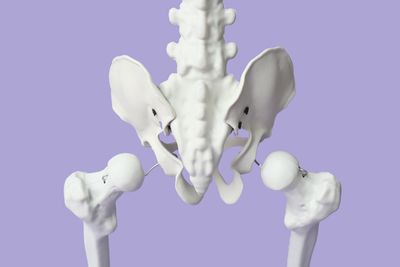
- In Homo sapiens men, the hip socket is shifted forwards slightly, acting as a shock absorber and providing greater forward motion.
- Study author Yoel Rak told IFLScience that this enhances the ability of men to cover long distances on foot.
- Women don't share this adaptation as it would lead to obstetric complications. They therefore retain the ancestral pelvic form, which is also seen in male Neanderthals.
Modern human males are uniquely adapted for long-distance walking thanks to a specially altered pelvis not shared by prehistoric hominins. Women, however, did not evolve this particular mechanism, and possess a more ancestral pelvis that is strikingly similar to that of male Neanderthals.
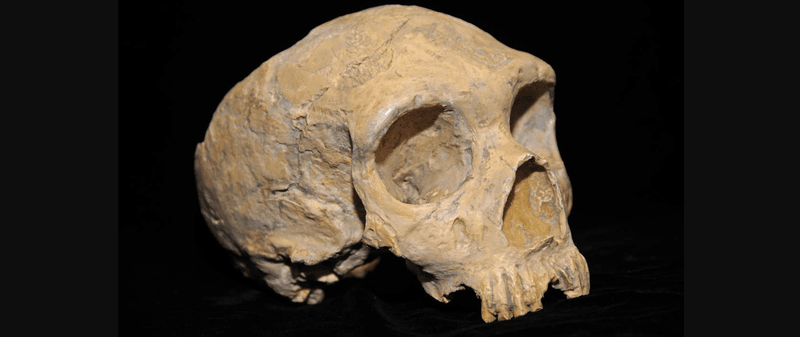
So far, only two complete Neanderthal pelvises have ever been found. The first of these was recovered from the Kebara Cave in Israel in 1983, while the second was excavated from the Sima de los Huesos site in Spain in 2001.
Researchers have now analyzed these two specimens – both of which belonged to Neanderthal males – in detail, and compared their morphology to modern human pelvises.
“It's amazing in how many ratios and measurements the male Neanderthal [pelvis] looks like a human female,” said study author Yoel Rak from Tel Aviv University.
However, after scaling the Neanderthal pelvis to the size of the Homo sapiens equivalent, the researchers noted that the acetabulum – or hip socket – is shifted forwards by about 2.6 centimeters (1 inch) in modern human males.
The study authors suggest that this “transforms the modern human male pelvis into a shock-absorbing device that cushions the drop of the center of mass with every step and at the same time stores potential energy in the flexor muscles of the thigh, causing the pelvis to bounce back.”
In other words, this unique adaptation gives human men a spring in their step, which neither Neanderthals nor modern human women share.
“What we see here is a cushioning device, because with every step that somebody takes, the center of gravity drops down,” Rak told IFLScience. The positioning of the hip socket in human men then enables greater upward motion by harnessing “the springs from the anterior chamber of the thigh,” he says.
The result of all this is an enhancement in walking efficiency and improved long-distance locomotion. This, in turn, may have given modern human men an advantage when it came to stalking and hunting prey.
“Hunting relies on the ability to follow prey over long distances,” says Rak. “You kill it by walking, as we know very well from ethnographic literature.”
The proof is in the pudding [...] that this provides human males the ability to cover long distances.
Yoel Rak
However, the forward shift in the acetabulum is not shared by human women, as this would require an elongation of the birth canal, resulting in significant obstetric disadvantages. As a result, females retain the ancestral pelvic form seen in Neanderthals – and probably Homo erectus too.
In other words, Homo sapiens men appear to have developed a unique biomechanical pelvic mechanism that differs from anything that has previously arisen in human evolution, while women continue to display the morphology that has accompanied our genus for potentially millions of years.
Despite all of this, Rak is cautious not to link these findings to biologically determined gender roles in Homo sapiens, and doesn’t conclude that men were always the hunters.
“I cannot say anything about hunting or all these scenarios,” he insists. “I can just say – and the proof is in the pudding, in the measurements and in the geometry – that this provides human males the ability to cover long distances.”
The study is published in the journal Scientific Reports.