Space and Physics
 PUBLISHED
 2
2


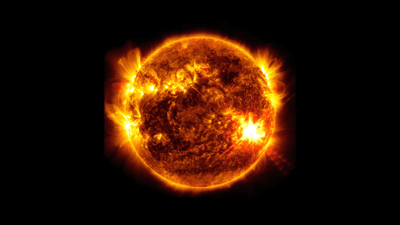


We should be very grateful for our planet’s magnetic field every day, but in particular when there is a massive solar storm. The effect on our planet is already enormous, producing aurorae, and affecting satellites and power infrastructure. But on Mars, things get a lot scarier for our robotic explorers.
The super solar storm of May 2024 was quite incredible here on Earth. We had the biggest geomagnetic storm in decades, with aurorae visible at very low latitudes. The storm did not stop at Earth, but reached Mars as well, and two missions from the European Space Agency were at the right place at the right time to measure major changes in the Martian atmosphere.
ESA’s Mars Express and ExoMars Trace Gas Orbiter (TGO) spotted an increase in the number of electrons in two distinct layers of the atmosphere. At 110 kilometers (68 miles) of altitude, there was an increase of 45 percent in electrons. At 130 kilometers (81 miles), the increase was 278 percent. This is the highest number of electrons ever seen in that region of the Martian atmosphere.
“The impact was remarkable: Mars’s upper atmosphere was flooded by electrons,” ESA Research Fellow Jacob Parrott, lead author of the study, said in a statement. “It was the biggest response to a solar storm we’ve ever seen at Mars.”
The observations were only possible with the crucial alignment of the two spacecraft when the storm arrived, and a technique that is relatively new on Mars, only used over the last five years. Mars Express beams radio waves at TGO as the latter is about to vanish over the horizon. The radio waves are refracted by the Martian atmosphere and still reach TGO while out of sight.
In the measurement of radio waves, there is information about the layers of the atmosphere. As the powerful solar storm hit, TGO was just about to travel behind Mars. The work revealed insights into how powerful particle releases from the Sun affect the Red Planet.
And not just its atmosphere. The orbiter and the rovers on the ground were affected by the increase in radiation from the Sun.
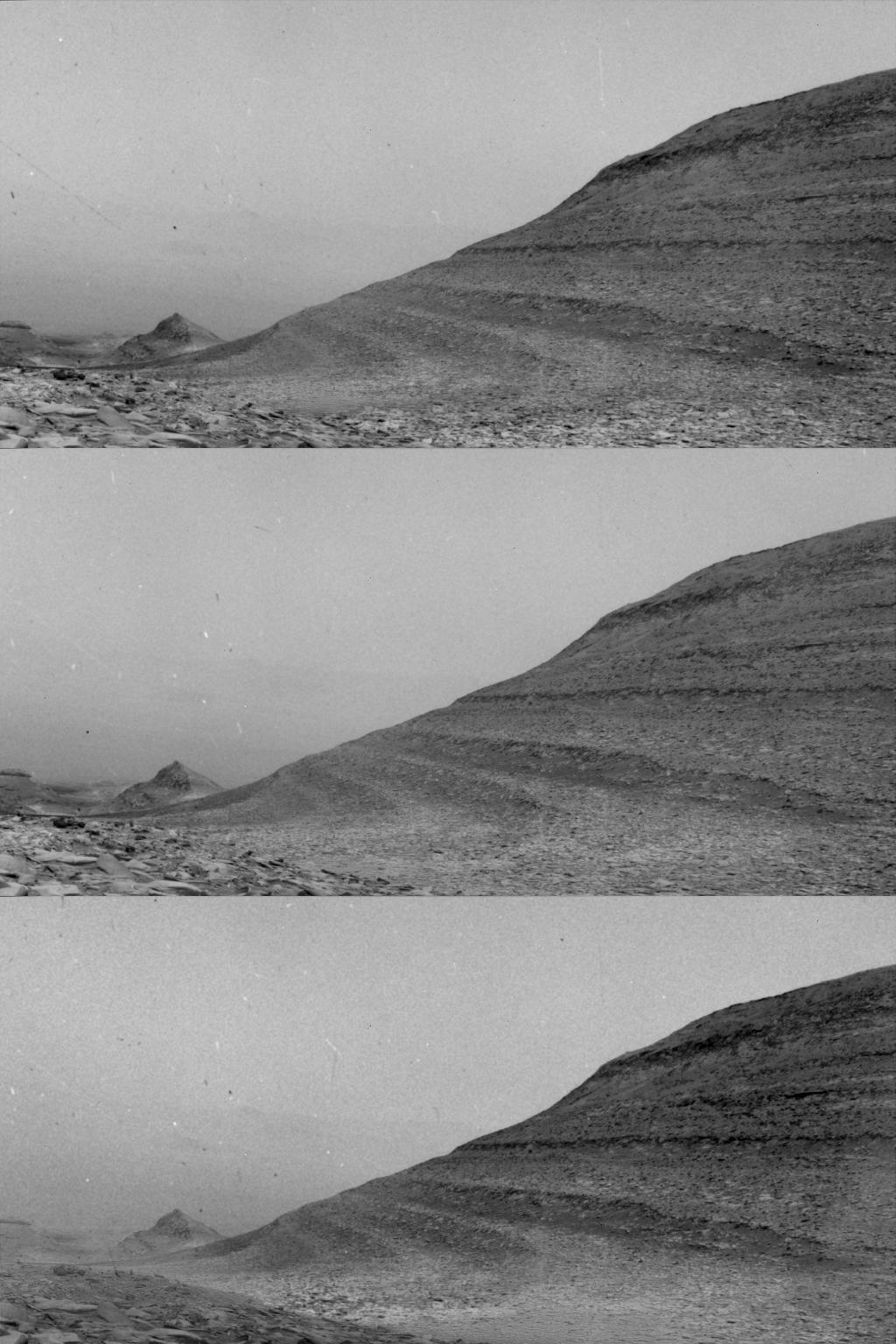
“The storm also caused computer errors for both orbiters – a typical peril of space weather, as the particles involved are so energetic and hard to predict,” added Parrott. “Luckily, the spacecraft were designed with this in mind, and built with radiation-resistant components and specific systems for detecting and fixing these errors. They recovered fast.”
The study is published in Nature Communications.