


 Nature
 PUBLISHED


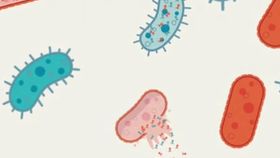


Bacteria and other microbes have adapted to the viruses that infect them. Some have not only learned to survive a viral load, but turned it to their advantage, releasing viruses at their enemies in escalating biological warfare. New discoveries reveal some even turn themselves into the microscopic equivalent of suicide bombers, destroying enemies as they die.
Microbial communities are complex mixes of harmonious coexistence and struggles for resources. To clear the way for themselves, some microbes have taken to killing competitors. One method, producing antibiotics to which they themselves are immune, has attracted attention for the rich store of potential medications it provides against similar organisms that infect humans.
More recently we have learned some bacteria do something similar with viruses, breeding varieties to which they have adapted, and then releasing them at rivals. The University of Tennessee's Professor Alison Buchan noted every marine bacterium has approximately 100 viruses in it, and this may be an underestimate, leaving out those we currently lack the capacity to detect.
At the American Association for the Advancement of Science conference Buchan presented a talk on her research on an even more sophisticated strategy.
"We have recently discovered that while they are in the process of dying, microbes can produce new viruses that then go to attack their original invader. This is a form of resistance we had not observed before," Buchan said in a statement.
This strategy may not save the individual bacterium, but like a honey bee sacrificing itself for the good of the hive, it can ensure the species maintains its place in the ecosystem.
Buchan noted many viruses remain inside bacteria quite benignly for some time, before switching to a lethal stage that releases copies of the virus into the surrounding environment when the host dies. The trigger to change phases appears to be associated with the bacterium coming under some form of stress, but Buchan said at a conference press briefing the details remain unclear.
“A lot of what we know of host-virus interactions is based on a very limited number of systems, so anything we learn about new ones will help,” Buchan said.
There are obvious implications for these findings in the struggle against disease. Viruses that kill bacteria, known as phages, have been used for treatment, mostly in Eastern Europe.
In addition, these relationships can affect the rate of climate change.
Professor Matthew Sullivan of Ohio State University found the viruses are sticky and can clump marine carbon together, causing it to sink to the bottom of the ocean where it does not contribute to global warming. “There is already talk of engineering viruses at scale,” Sullivan said, to create superviruses that speed up the process. Disaster movie script writers, have we got an idea for you.


 1
1