Nature
 PUBLISHED


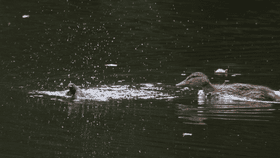


Visits to the park will never be the same again, as wild Mallard ducks (Anas platyrhynchos) have been documented for the first time ever hunting down and eating other birds at Trei Ape reservoir in southwest Romania.
The research into this elusive, never-before-recorded phenomenon can be found in the in the journal Waterbirds.
The new study documents an overcast day, when an 11-strong group of Mallards was spotted repeatedly attacking, drowning, and then munching down on a baby Black Redstart (Phoenicurus ochruros) bird. Another sighting also saw Mallards attacking then consuming a Grey Wagtail (Motacilla cinerea). Both species are small, common birds, and it is thought the ducks could catch them because they were young struggling fledglings.
Typically, Mallard ducks live on a simple diet of aquatic plant life and insects. The only vertebrates Mallards are known to also occasionally eat are fish and amphibians. This behavior is particularly unexpected since Mallard ducks are rarely aggressive or predatory in both the wild and farming environments, especially compared to other duck species like Muscovy Ducks.

One theory the researchers have is that the Mallards were struggling with a lack of animal proteins, perhaps due to intense competition for insect larvae by fish introduced for angling. In a desperate bid for high-protein food during egg-laying season, the ducks turned to eating other birds.
“Hopefully, there will be more reports from readers that have seen similar things,” Dr Silviu Petrovan, lead author of the study from the University of Cambridge, told IFLScience. “[We've] already got two [new reports] from New Zealand, 11 years apart, which is very interesting and shows that Mallard can actually learn to hunt birds and then probably teach each other.”
So, if you’ve ever documented Mallard ducks partaking in this kind of predatory behavior, Dr Silviu Petrovan would like to hear from you.
This rare, newly-documented behavior comes with some concerns, though. The researchers noted the predation of birds by Mallards could increase transmission of pathogens such as parasites or Salmonella, which is worrying as ducks are eaten by humans. The risk is low since this behavior appears to be extremely rare, however, the transmission of “bugs” has been shown before among birds that predate other bird species.

Nom nom nom. Photo courtesy of Silviu Petrovan/Mihai Leu
[H/T: BBC]