Health and Medicine
 PUBLISHED


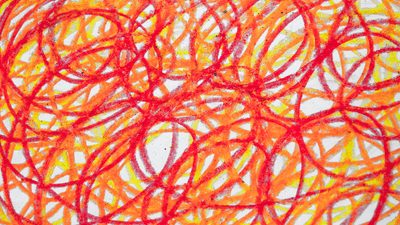


Humans have been churning out art in different forms for millennia, demonstrating that creative self-expression is important for the species, but what does it do for our health? Turns out, dedicating a small window of your day to art making may have a positive influence on biomarkers of stress, and best of all? You don’t have to be any good at it to reap the benefits.
We enjoy relaxing activities, and one way of measuring how relaxed (or not) we’re feeling is through taking cortisol samples. Cortisol is a hormone produced by the adrenal glands that’s something of an all-rounder, playing a role in everything from reducing inflammation to increasing the breakdown of glucose.
It’s also released as part of the body’s stress response, which is why some know it as the “stress hormone”. It helps us to stay on high alert by ramping up the functions we do need and slowing down the things we don’t. This is why high levels are generally an indicator of stress, but our levels do also change throughout the day, usually peaking in the morning and declining to a low at night.
This study took saliva samples from 39 participants between 18 to 59 years old both before and after they spent 45 minutes making art. They could work in whatever format they liked, ranging from works on paper to modeling clay and collage materials. The participants were a mixed bag, too, with just under half saying they had limited artistic experience.
The participants self-reported their experiences, sharing that the sessions were relaxing, reduced anxiety, and helped them gain perspective. One wrote, “I was able to obsess less about things that I had not done or need[ed] to get done.”
The proof was also in the spit, as the results showed that cortisol levels lowered during the 45-minute session in 75 percent of the participants. This result didn’t have any correlation with ability, showing that you didn’t have to be good at art to reap the benefits of making art.
“It was surprising and it also wasn’t,” said Girija Kaimal, assistant professor of creative arts therapies, in a statement. “It wasn’t surprising because that’s the core idea in art therapy: Everyone is creative and can be expressive in the visual arts when working in a supportive setting. That said, I did expect that perhaps the effects would be stronger for those with prior experience.”
So, if you’ve got 45 minutes and literally anything to hand that you can make art with, why not take a relaxing break that just might help you sweat the small stuff a little less.
The study is published in the journal Art Therapy.