Humans
 PUBLISHED
 2
2




A long-lost city dating back some 2,400 years has been discovered next to a temple dedicated to the ancient Egyptian cobra goddess Wadjet. Unearthed in the eastern Nile Delta, the once-bustling settlement of Imet supported a large population during Egypt’s Late Period, yet the empire’s defeat at the hands of Alexander the Great appears to have altered the city’s religious traditions.
Imet is located at the archaeological site of Tell el-Fara’in (also known as Tell Nabasha), where initial excavations two centuries ago failed to spot the remains of the city, focusing instead on the nearby temple. Revisiting the site, archaeologists used high-resolution satellite imagery to identify clusters of ancient mudbricks that hinted at the presence of large domestic structures.
Once on-the-ground excavations began, the team uncovered a dense residential area including multi-storey “tower houses” with enormous foundation walls, which were designed to accommodate large numbers of people. “These tower houses are mainly found in the Nile Delta between the Late Period and the Roman era, and are rare elsewhere in Egypt,” said mission director Dr Nicky Nielsen in a statement.
“Their presence here shows that Imet was a thriving and densely built city with a complex urban infrastructure.”
Traces of everyday life were found throughout the ancient city, with the BBC reporting that the researchers even found a cooking pot containing the remains of a fish stew that was cooked up in the fourth century BCE. A paved area for processing grain and animal enclosures were also identified, as were the remains of a large religious building featuring massive stone pillars.
Dating to the mid-Ptolemaic Period, which began following Alexander the Great’s conquest of Egypt, the edifice sits atop the processional road that led to the temple of Wadjet, indicating that the practices associated with this road were altered or extinguished once the Macedonian Greeks took over.
Prior to this, the cobra goddess had served as the patron saint of this part of Egypt, and great pharaohs, including Ramesses II, had shown their respect by building or rebuilding her temple at Imet.
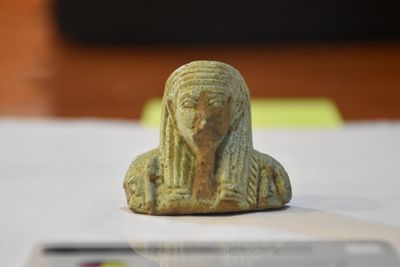
Other artifacts found at the site help to paint a more detailed picture of the spiritual beliefs held by the city’s ancient residents. For instance, the researchers unearthed a type of figurine known as a shabti, which was made of green faience and would have been placed in a tomb in order to excuse its occupant from hard labor in the afterlife.
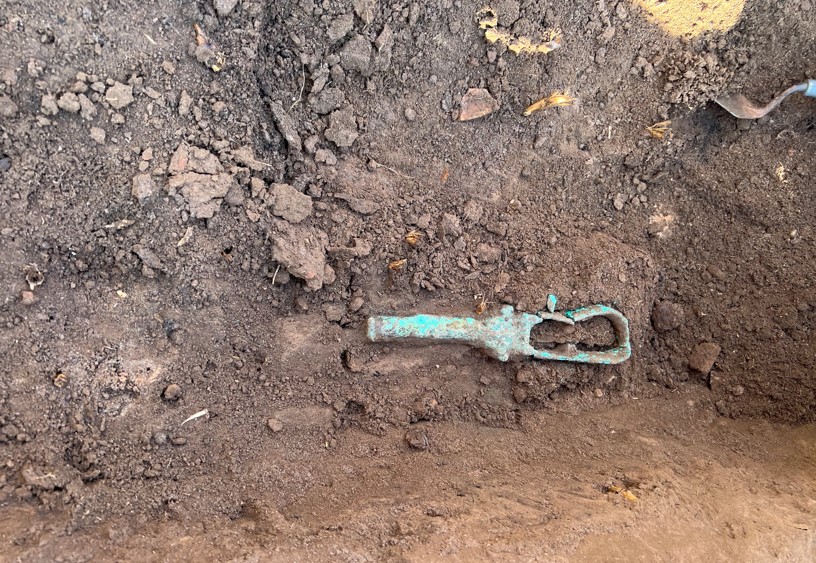
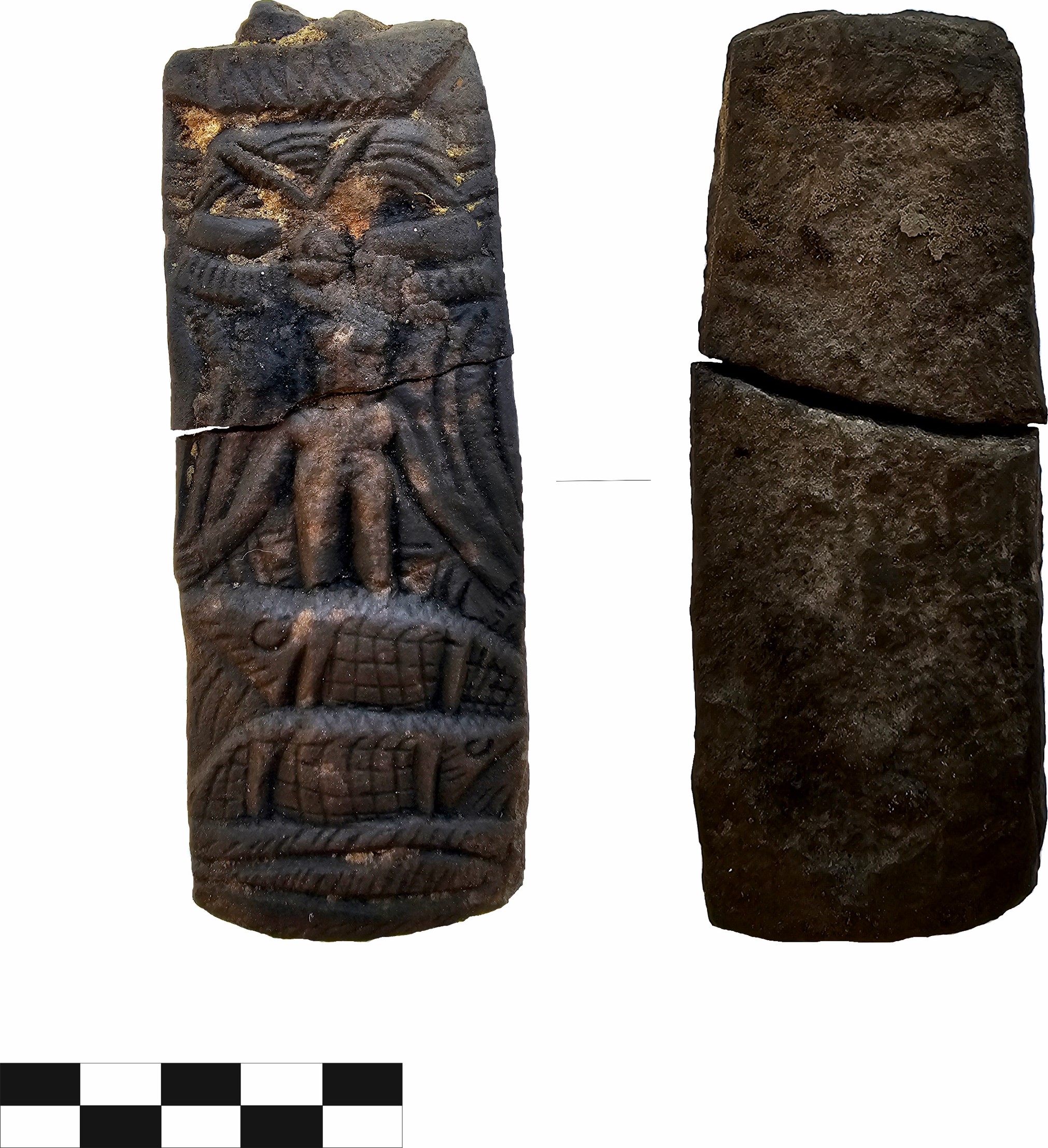
A small stela depicting the god Harpocrates standing on a pair of crocodiles with the head of the god Bes above him was also found, and was probably intended to ward off disease. Elsewhere, the excavators discovered a type of musical rattle called a sistrum, decorated with an image of the two heads of Hathor, the goddess of music and joy.
“This discovery opens new doors to our understanding of daily life, spirituality, and urban planning in the Delta,” said Nielsen. “Imet is emerging as a key site for rethinking the archaeology of Late Period Egypt.”