Nature
 PUBLISHED




An elusive bird species only seen once in the last 100 years has been rediscovered in the remote highlands of Indonesia. First described more than 100 years ago, the first photos of the species were only taken in 2014 – now, however, the blue-fronted lorikeet has been seen again.
On the island of Buru in Indonesia, a 14-day trek took place to try and track down this mystery bird. The species lives nowhere else on Earth, and was described from seven specimens in the 1920s.
Despite its name, the blue-fronted lorikeet is bright lime green with an orange bill. For nearly 100 years the species was not found, until a photograph was taken in 2014 by Craig Robson on a Birdquest tour.
Given its mysterious nature, the blue-fronted lorikeet was added to the Search for Lost Birds program – a global partnership between American Bird Conservancy, Re:wild, and BirdLife International – as well as being considered critically endangered. Experts thought it might still be out there, unseen thanks to the remote and inaccessible nature of the Mount Kapalatmada region; the birds were hopefully just hiding at higher elevations.
Access to that area is difficult to say the least; however, a group of climbers had opened up a new a route to the top of the island's highest peak, and in April 2026 a birding group took on the challenge. Within hours of reaching the top of the mountain the landscape changed and two lime green birds flew past.
"We noticed two small birds fly into a nearby tree so I picked up my binoculars to see what one of them was,” said John C. Mittermeier, Director of the Search for Lost Birds at ABC in a statement. “I short-circuited with excitement when I realized it was a blue-fronted lorikeet.”
The birds flew too fast for anyone to get a photograph, but a few days later another lorikeet appeared in time for breakfast. This one was photographed, marking the first new photos of the species since 2014.
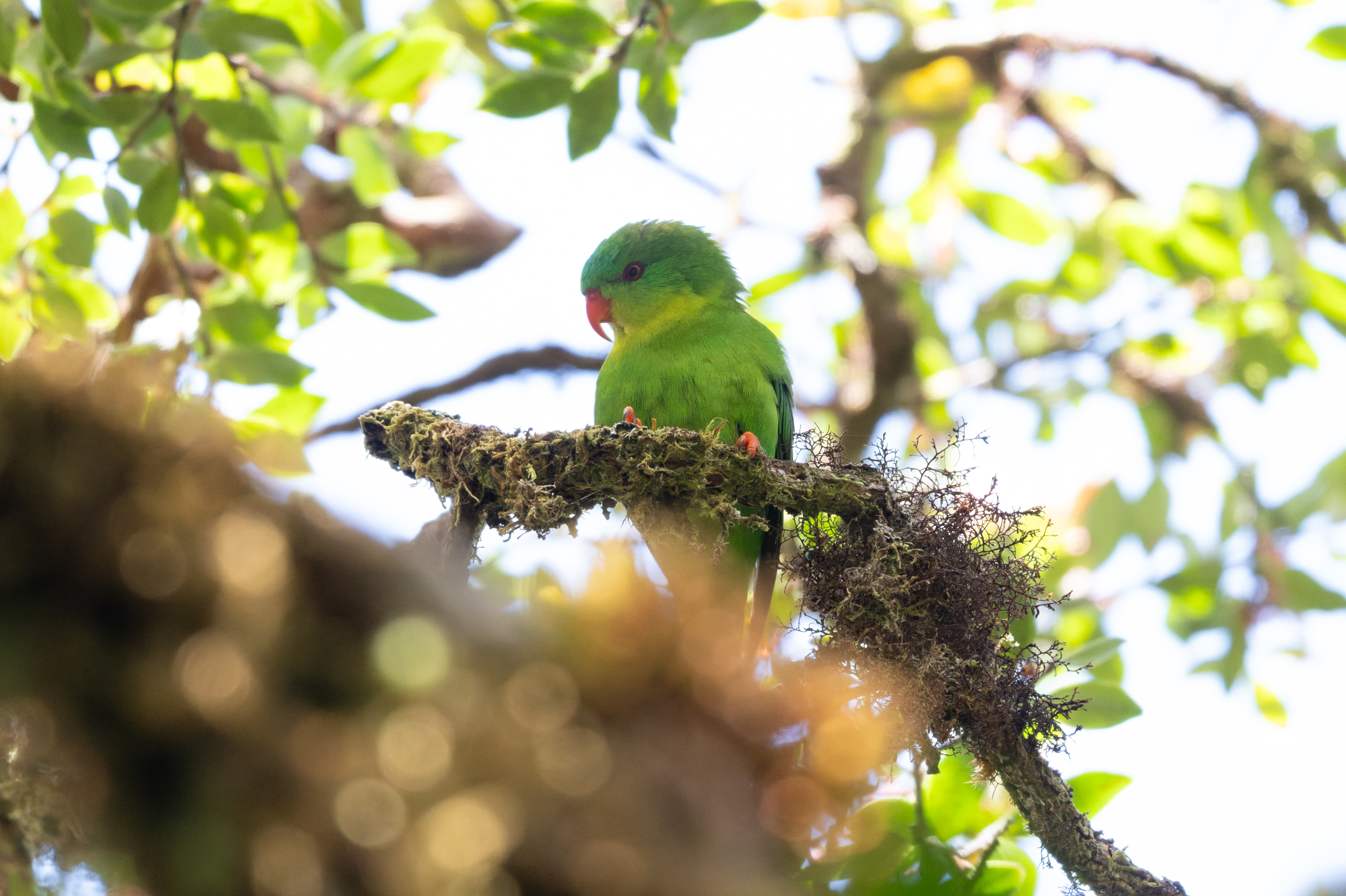
“When we saw the blue-fronted lorikeet, I couldn’t hold back my tears,” said Sumaraja, Birdtour Asia guide and tour leader. “Every day, I almost cried with joy at seeing that these birds still exist.”
The team also managed to record the calls of the birds, but at present are not sure how many of these beautiful bright green lorikeets might remain.
“Rare sighting records suggest a highly restricted habitat use,” said Benny A. Siregar, Maluku Coordinator at Burung Indonesia. “The primary challenge facing the Blue-fronted Lorikeet is that they are facing threats that remain largely unknown. This bird inhabits areas under continuous pressure from deforestation, with a population estimated to be exceedingly small and vulnerable.”
What has kept the lorikeets safe all these years might be their greatest defense when facing logging and mining companies. The rediscovery highlights how these species can survive even in remote locations.
“In the future, I certainly hope more people will be able to see and learn more about these birds,” added Sumaraja. “At the same time, I sincerely hope more people will care about and participate in preserving the remaining forests on Buru Island.”