Nature
 PUBLISHED
 2
2


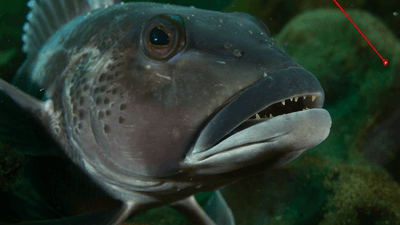


Blue cod in New Zealand’s Marlborough Sounds were feline frisky during a recent research project in which scientists were using lasers to research the species (Parapercis colias) in the region. Reviewing the footage, the team discovered that the blue cod were doing something strangely cat-like – they started chasing the lasers.
“When trying to count and measure the blue cod, we saw that they were chasing our lasers, just like cats do!” National Institute of Water & Atmospheric Research Ltd (NIWA) marine ecology technician Charlotte Bodie said in a statement emailed to IFLScience. “I have trudged through a lot of underwater footage in my time, but never seen something like this. No other species seemed to be doing it."
It might be a first for the team in New Zealand, but it's a behavior that's been spotted among wrasse in England, too.
“It certainly broke up the monotony of the work," continued Bodie. "We do a lot of video analysis and see plenty of interesting and unique fish behaviors, but unfortunately don’t have time to investigate everything.”
While a funny comparison to cats' obsession with laser pointers, it didn't make for the smoothest of experimental conditions. The NIWA technicians were trying to measure the size of the cod, as well as their numbers, but getting an accurate read wasn’t easy with all the kittening around.
“It made it hard for us to count blue cod as they tended to aggregate and follow the lasers,” explained NIWA marine ecology technician Brooke Madden, “but it also meant we could measure the fish more accurately because they swam closer to the lasers.”
The New Zealand blue cod is a hefty specimen, weighing up to 3 kilograms (6.6 pounds) and stretching to 60 centimeters (23.6 inches) in length. As protogynous hermaphrodites, they can switch up their sex from female to male, and the team’s current project – funded by Fisheries New Zealand – hopes to shine a light on the juvenile habitats of the species.
As for why the fish were so into chasing the lasers, that’s a scientific discovery for another study – but these curious creatures certainly have the equipment for zooming in on tiny targets.
“They are very inquisitive fish with large lateral eyes that can rotate independently, allowing them to see almost anywhere around them,” concluded Bodie. “Finding out why they chase the lasers like cats could make a great project one day.”
Playing lasers with blue cod, but make it science? Count us in!