Nature
 PUBLISHED


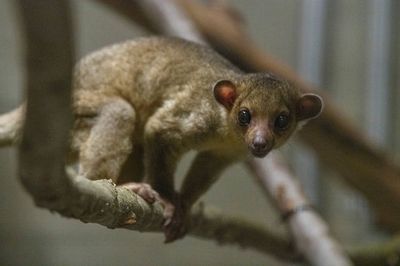


A highway rest stop in Yakima, Washington, had an unusual visitor recently, with a mammal called a kinkajou (Potos flavus) – usually found in the forests of the Neotropics – being found by Interstate 82 in the Pacific Northwest state. The animal was rescued by Washington Department of Fish and Wildlife Police officers on June 23, and is currently being cared for by Point Defiance Zoo & Aquarium (PDZA).
"Why was it at our east Selah Creek Rest Area over the wknd? We have no idea,” Washington State Department of Transportation East posted on X. “We don't know if it was dropped off or escaped.” The little guy is very much a mystery at this point, with PDZA telling IFLScience: "We do not know yet where he came from."
The kinkajou "underwent a comprehensive wellness exam on June 27," PDZA continued. "He has a good appetite and zoo staff are feeding him a full and healthy diet. We are awaiting the results of diagnostic testing, including comprehensive blood work, to get a complete assessment of his health."
The International Union for Conservation of Nature (IUCN) states that these mammals are found in forests across Surinam, Mexico, Peru, Venezuela, Guatemala, French Guiana, and Brazil – a far cry from a rest stop in Washington. “This young kinkajou’s survival is a testament to the collaborative efforts of state wildlife law enforcement and the zoo, highlighting the dangers of the illegal pet trade,” PDZA said in a statement.
Although the kinkajou is classed as Least Concern by the IUCN, they state that “Potential threats include deforestation, capture for the pet trade and hunting for its meat and pelt.”
Kinkajous are members of the Procyonidae family, much like raccoons, and are known for their love of honey. They are one of the two carnivores in the world that have a prehensile tail, sharing the honor with the popcorn-scented binturong.
They can also turn their feet backward to help them scurry up and down trees, dubbed a “nice adaptation to have” in a video of an examination of the kinkajou found in Washington posted by PDZA.
The kinkajou was immediately quarantined upon arrival at the zoo. PDZA’s Head Veterinarian Dr Karen Wolf said that the little guy is in “fair health overall” but is “very thin, weighing only 2.5 pounds [1.14 kilograms],” with males of the species usually weighing 1.4 to 4.5 kilograms (3 to 10 pounds).
The zoo is currently working with the Association of Zoos and Aquariums to find this misplaced mammal a forever home.