Nature
 PUBLISHED


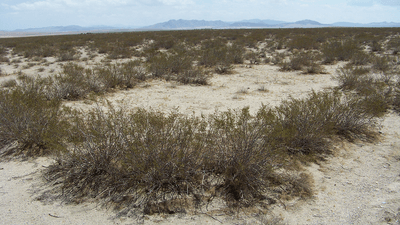


In the Mojave desert lives a creosote bush ring called "King Clone", thought to be one of the oldest living organisms on Earth.
The clonal colony – a group of genetically identical plants that all originate from a single ancestor – is thought to have begun growing 11,700 years ago, around the time human agriculture began.
To test the plant's age, researchers measured how long it takes for the bushes to grow outwards in a ring, as well as radiocarbon dating the center of the ring itself. Both methods led to the conclusion that they were studying a very old bush indeed.
In fact, Frank Vasek – a professor at the University of California, Riverside, who dated the creosote ring – believed that the bush was one of the first life forms to expand across the Mojave Desert after the last ice age.
While the original central bush died, the bushes around it are direct clones of the original. Slowly, the root system of the original plant grew outwards and new clones grew, slowly moving outwards to form the 22 by 8 meter (72 by 26 foot) ring we see today.
Though impressively old, it is not the oldest organism on Earth. One of the oldest is Pando, a colony of 47,000 quaking aspen clones in Utah, thought to be 14,000 years old.