Health and Medicine
 PUBLISHED


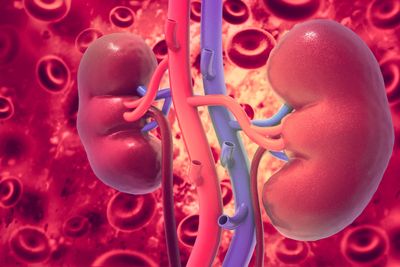


In a massive win for organ transplantation research, scientists have demonstrated that they can successfully change the blood type of a donor kidney to type O before transplanting it into a brain-dead recipient. All signs pointed towards the new organ being “well tolerated” with no evidence of immediate rejection.
Government figures suggest over 100,000 people are waiting for a donor organ in the United States alone, and there simply aren’t enough to go round. Data from September 2024 show that kidneys were by far the most needed organ – and that’s despite the fact it’s sometimes possible for people to receive one from a living person, which widens the pool of donors somewhat.
Lots of pioneering research is being done to find ways of preserving more organs, getting them to where they need to be, even replacing them with animal organs or devices in some cases.
One reason why an organ may not be suitable for a particular recipient is when there’s a mismatch in blood type. People with type A or type B blood carry antigens that are not present each other’s blood, and are absent altogether in those with type O blood.
Assuming other antigens don’t clash – a biggie is the rhesus antigen, which gives you the “positive” or “negative” bit of your blood type – type O can be given to As and Bs without any problem.
Two years ago, a team from the University of Cambridge reported that they’d successfully used an enzyme like “molecular scissors” to remove the B antigens from a human kidney, effectively turning it into a type O kidney that could be transplanted into a type A or B recipient. Similar feats have also been achieved with lungs, and other groups have done further work on kidneys.
“It’s like removing the red paint from a car and uncovering the neutral primer,” said Dr Steve Withers, who co-led the enzyme development, in a statement. “Once that’s done, the immune system no longer sees the organ as foreign.”
Now, scientists in China have repeated the feat with a type A kidney, transplanting it into a brain-dead person to test whether there would be any signs of immune rejection.
Using the enzymatic method, they successfully removed the A antigens from kidneys and saw no evidence of injury in an ex vivo experiment. This paved the way for them to try a transplant for real.
They performed the same procedure on a kidney that had been rejected for transplantation, converting it to a type O organ, before transplanting it into a brain-dead recipient. The recipient had high levels of anti-A antibodies, which would have meant certain rejection for a type A kidney, but thankfully the antigen removal procedure appeared to have worked.
“[N]o hyperacute rejection was observed,” the authors write. “The graft was well tolerated with no evidence of antibody-mediated rejection for 2 days.”
Some evidence of an immune reaction did begin to appear on day 3, but the authors say the information they’ve gathered could help design clinical protocols to combat this if a transplant were attempted in a living recipient. Lifelong immunosuppressants are needed after an organ transplant, even a very well-matched one, because of the risk of rejection.
The team also saw evidence of accommodation, a phenomenon whereby a donor organ can become resistant to injury despite a host immune response.
It’s another step towards a future where more people are able to get the transplants they need. “This is what it looks like when years of basic science finally connect to patient care. Seeing our discoveries edge closer to real-world impact is what keeps us pushing forward,” said Withers.
The study is published in the journal Nature Biomedical Engineering.

 1
1