


 Health and Medicine
 PUBLISHED





Neuroscientists often talk about the “hard problem” of consciousness, which refers to the difficulty in understanding how neural activity in the brain gives rise to subjective, personal experiences - or qualia.
Exactly which structures and processes inside our heads produce the phenomenon of consciousness remains something of a mystery, which means there’s little consensus over the point at which this property emerges in an unborn human.
But by collating all the available neuroscientific research and developmental data, the authors of a new study tentatively propose a model to explain how and when the lights come on in a growing fetus.
Based on the emerging evidence, the researchers say that consciousness may not be dependent on higher cognition, but instead appears to materialize out of a more primitive ability to feel and perceive one’s own presence.
According to the authors, the brain structures required for this capacity are not located in the cortex, but in the brainstem, which is far more evolutionarily ancient and controls some of our most basic functions.
They therefore put forward a “subcortical model” for the origin of consciousness, which posits that sentience may begin before the cerebral cortex is fully developed. This is the large, wrinkly outer layer of our brain thought to play a role in perception, thought, and memory.
Instead, the researchers highlight two components of the brainstem which may ignite consciousness. This is the stem-like structure on the brain that connects the main cerebrum to the spinal cord.
The first of these components is the ascending reticular activating system (ARAS), which essentially turns the brain on by enabling wakefulness and maintaining consciousness. Experiments in cats, for instance, have shown that injuries to the ARAS lead to coma, while cortical lesions do not.
The periaqueductal gray (PAG), meanwhile, is fundamental for what is called valenced affective consciousness, whereby an organism is able to experience external stimuli as positive or negative. “By integrating interoceptive signals, visceral arousal, and environmental threats, it generates the raw affective qualia, the biological values, that imbue wakefulness with personal significance,” write the researchers.
“The central thesis is that ARAS plus PAG constitute the minimal neural architecture for sentient consciousness,” explained study author Saúl Sal Sarria from the University of Oviedo. “The ARAS ensures that the organism is awake; the PAG ensures that this state of wakefulness is felt by a subject,” he told IFLScience in an email.
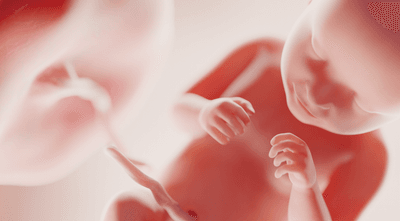
And while it’s impossible to pinpoint the exact moment at which consciousness powers up in a human fetus, the researchers propose that this may occur in the third trimester of pregnancy. “Rather than appearing abruptly, consciousness unfolds along a continuum, rooted in brainstem systems that are already active before birth,” they write.
“However, if we are required to identify a specific time period as the origin of these mental experiences, the third trimester of pregnancy would be the most likely candidate.”
Such a finding carries a number of ethical implications. For instance, if an unborn baby is capable of “genuine felt experience”, then the management of fetal pain during invasive procedures becomes a matter of high importance.
However, the study authors are at pains to point out that this entire field remains understudied and poorly understood, and that their findings are based on a synthesis of the available evidence rather than new empirical data.
“It is important to note that this is a hypothesis based on structural and behavioral correlates, not on direct measurement of subjective experience,” says Sal Sarria.
“We therefore frame our conclusions as "evidence-based hypotheses," not as demonstrations.”
The study has been published in the journal Brain Structure and Function.



 2
2