


 Health and Medicine
 PUBLISHED


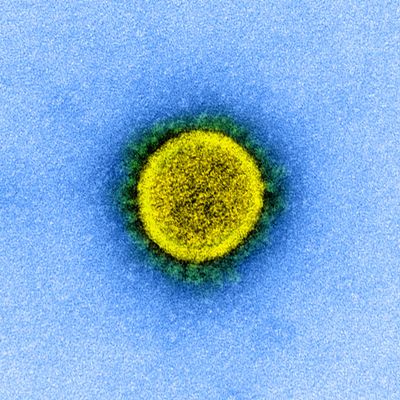


As the winter wave of COVID infections fades in California, a second summer wave has surged.
Currently, there are more COVID cases in the West Coast state than there were during the winter season. It is thought that this is being driven by the mutated “cicada” variant.
Known more formally as BA.3.2, the variant was first identified in southern Africa in 2024. Since then, it has spread around the world, having now been detected in least 32 countries, including Australia, Germany, and the US.
The variant has caught the attention of virologists and researchers because it has more than 70 spike mutations compared to the original wild-type virus.
Surging before school
The wave has been detected through data from WastewaterSCAN, which looks at the levels of the virus circulating in wastewater treatment plants. This has identified many parts of the Bay Area, San Francisco, as showing high and rising levels of the virus.
This particular variant has been nicknamed “cicada” in comparison to the insect’s long underground nymph stage, which was thought to be similar to the pattern of emergence seen with BA.3.2.
There are now concerns that this surge is happening just as schools start to go back.
“Whenever people get together, large groups, that’s often a time you worry about things just spreading more efficiently,” Dr. Peter Chin-Hong, an infectious disease expert at UC San Francisco, is reported as saying.
“What might look like a cold in say an adolescent or somebody in middle school could translate into something more serious in an older grandparent if they brought it home.”
A summer disease?
While historically, we’ve often thought of these kinds of respiratory infections as being more of a winter phenomenon, there is now growing evidence to suggest that, in California at least, the disease is becoming more of a summer concern.
“Our summer peak was much higher in 2025 than it was in the winter,” Dr. Erica Pan, director of the California Department of Public Health and the state public health officer, said in a briefing.
“Summer is really the bigger peak. So if you do have patients or loved ones who have not gotten the ’25-’26 vaccines, it is still effective and highly recommended, given this surge we’re starting to see.”
It seems that the shift from bigger winter to summer peaks started to occur around 2024. While so far this has been more noticeable in California, there is also evidence for this trend emerging right across the country.
Why it is happening, and if the trend will continue, is still unknown.
What is known, however, is that the COVID vaccines are safe and effective. A newly formulated shot is expected in the coming fall, but those at an increased risk of the disease can get a booster shot earlier if needed.



 2
2