Health and Medicine
 PUBLISHED
 1
1


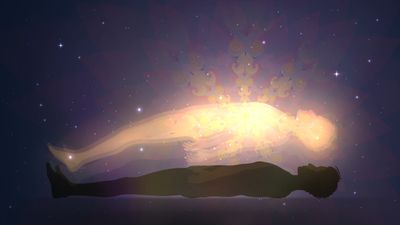


Researchers have observed the brains of dying patients going down in a blaze of neural glory, indicating that the final throes of life may be considerably more colorful than a mere fade to black. Despite their comatose state, some of the perishing participants displayed brain activity that is associated with consciousness during their last moments, all of which may explain the ethereal experiences often reported by heart attack survivors.
“Near-death experiences (NDE) reported to be highly lucid, 'realer than real', and common to people from diverse cultural and religious backgrounds, have been described by 10 to 20 percent of cardiac arrest survivors,” write the study authors. However, “NDE represent a biological paradox that challenges our fundamental understanding of the dying brain, which is widely believed to be nonfunctioning under such conditions.”
Despite this, previous studies on animals have shown that the sudden termination of cardiac activity triggers a surge of brainwave activity within the gamma frequency brand, which is associated with conscious processing. To determine whether the same occurs in humans, the study authors examined electroencephalography (EEG) readings taken from four cardiac arrest patients who passed away in the neurointensive care unit (NICU) at Michigan Medicine, University of Michigan.
All four patients were comatose and unresponsive following their heart attacks and eventually had their life support removed after they were deemed to be beyond medical help. As soon as the oxygen supply was cut off, the researchers observed an increase in heart rate and a surge of gamma wave activity in two of the four patients.
Amazingly, this activity was detected within the part of the brain where the temporal, parietal and occipital lobes meet. Known as the “hot zone”, this brain region is strongly linked to conscious activity and is activated during the regular waking state as well as during dreaming.
Hot zone activation has also been observed in unusual states of consciousness such as hallucinations and out-of-body experiences.
Despite these findings, the researchers can’t say for sure if any of the patients saw a white light or any other conscious phenomena, since none of them survived to report their experiences. “We are unable to make correlations of the observed neural signatures of consciousness with a corresponding experience in the same patients in this study,” explained study author Nusha Mihaylova in a statement.
“However, the observed findings are definitely exciting and provide a new framework for our understanding of covert consciousness in the dying humans.”
The study has been published in the Proceedings of the National Academy of Sciences.