Health and Medicine
 PUBLISHED



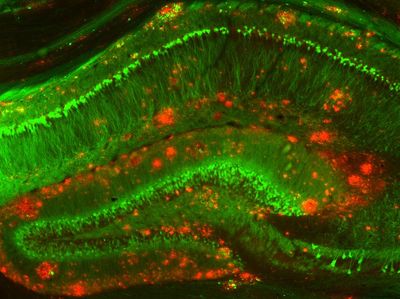


Changes to immune cells in the central nervous system after receiving the tuberculosis vaccine could explain why people who have received it have a lower risk of Alzheimer’s disease.
Imagine you hire someone to do a job, but they’re very bad at it, getting less than half of what you expect done. You want to replace them but can’t find anyone better, and then you slowly notice that, while they’re pretty terrible at the job you hired them for, they’re great in other ways. Indeed, it seems the employee you thought a dud held the workplace together by doing a small but significant amount of everyone else’s jobs.
That’s pretty much the story of the Bacillus Calmette-Guérin (BCG) vaccine. Designed to stop tuberculosis, it’s proved something of a disappointment when it comes to fighting the most lethal disease in human history.
An estimated 1.25 million still die each year from TB, overwhelmingly in poorer countries. While richer countries have managed to largely eliminate the disease, they've mostly achieved this through other means. The search goes on for a better vaccine.
Yet evidence has piled up that BCG does provide modest protection against a staggering array of other illnesses. That protection is never anything close to 100 percent, but a small lowering of the risk against many diseases still adds up. Now it seems one of the ways BCG can help is in preventing the most common cause of dementia.
Three years ago, a randomized controlled trial of people given BCG in the hope of protecting them against another disease – bladder cancer – found a 20 percent reduction in Alzheimer’s disease and related dementias over 15 years. Exciting as this is, researchers were left struggling to explain why.
Most research into how BCG affects other diseases has focused on changes in the blood, but that gets complicated when you're talking about the brain because of something called the blood-brain barrier. This is a membrane that controls how substances pass between the circulatory system and the central nervous system.
The barrier means it can't be taken for granted that changes in the blood will make it into the brain, so something different might be going on if the apparent Alzheimer’s reduction seen in that trial was real.
To find out what that might be, Marc Weinberg at Mass General Brigham Hospital led a small study of the cerebrospinal fluid and blood of 23 people 55 years and older, 11 of whom already showed signs of Alzheimer’s disease. Participants received two BCG vaccines two months apart and had blood samples and lumbar punctures taken before the study started, with follow-ups three and 12 months later.
In keeping with past work, the study found a stronger immune response after the BCG vaccine but without any signs of increased inflammation, a contributor to many autoimmune diseases. Previous studies had found the enhanced immunity in the bloodstream works broadly through metabolic changes to immune cells called T cells and increased production of cell-signaling molecules; this study detected parallel changes to immune cells in the cerebrospinal fluid.
Moreover, levels of amyloid-beta, the peptide used to diagnose Alzheimer’s, were significantly lower in brain and spinal fluid after BCG vaccination among those without Alzheimer’s symptoms, despite increasing in the blood. Among those already diagnosed with Alzheimer’s disease, however, amyloid-beta concentrations didn't change significantly.
The study only ran for a year, so we don’t know how long these effects last, and the sample is small. It also didn't run as a randomized controlled trial – the gold standard in medicine – due in part to funding constraints. Nevertheless, the findings suggest BCG can delay or prevent Alzheimer’s when given early enough, but it won’t stop the process after a person begins to show symptoms.
Besides the need for larger and randomized trials, the authors note their findings don’t tell us whether vaccination against BCG administered during childhood, as is common in places where TB is widespread, prevents Alzheimer’s decades later.
"Vaccines have traditionally been viewed through the lens of infectious disease prevention,” Weinberg said in a statement. “Although more research is needed, these findings suggest they may also influence biological processes involved in brain aging and neurodegenerative disease."
Understanding how the vaccine stimulates responses in the brain’s defender cells could open a path to more targeted molecules to do the same thing.
BCG isn't the only vaccine that may reduce Alzheimer’s risk. A wide range of vaccines, most notably against shingles, have been associated with reduced rates of Alzheimer’s diagnosis in subsequent years. Although it’s still uncertain how cumulative these benefits are, there is a possibility that while we search for a specific Alzheimer’s vaccine, the combined effects of protecting oneself against many other diseases might go a long way in dementia prevention.
The study is open access in Communications Medicine.

 1
1