Health and Medicine
 PUBLISHED
 1
1



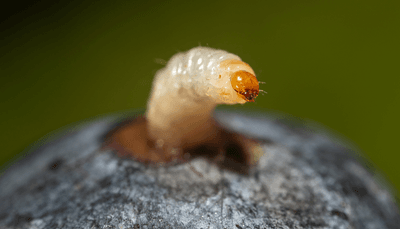


Flesh-eating maggots have just received clearance from the US Food and Drug Administration for the second time. The approval will allow physicians to use Australian sheep blowfly larvae as natural micro-surgeons, removing dead, damaged, or infected tissue from human patients.
The medical-grade fly larvae, dubbed MEDIFLY Maggots, are the product of Singapore-based biotech company Cuprina Holdings. The company has had FDA clearance to sell common green bottle fly larvae (Lucilia sericata) since 2004, but this latest green light lets it sell the offspring of a second species, the Australian sheep blowfly (Lucilia cuprina).
“We now hold FDA clearance for both species used in MDT [maggot debridement therapy], a position no other company holds,” David Quek, CEO of Cuprina, said in a statement.
“Lucilia cuprina has a meaningful international track record, and brings [sic] it under U.S. FDA clearance gives clinicians and their patients more flexibility in how this therapy is delivered,” he added.
What is maggot therapy?
Maggot therapy works by introducing larvae to dead, damaged, or infected tissue, which they break down using a mixture of proteolytic enzymes. This liquefied "flesh soup" is then ingested and digested by the maggots.
Beyond consuming dead and damaged tissue, the larvae also eat and neutralize pathogens living in the wound. In a clinical setting, they are sterilized before use, which eliminates the risk of them introducing new infections.
Maggot therapy has been around for thousands of years and is documented in a wide variety of cultures, from Australian Aboriginal tribes and the Maya of Central America to ancient China and Renaissance Europe.
The technique is also a staple in wartime, when short supplies and ghastly injuries are all too common. Napoleon's army reportedly used maggots to treat wounded soldiers, as did physicians during the American Civil War and both World Wars.
The therapy was pushed to the sidelines with the advent of mass-produced antibiotics in the 1940s, but as concerns around antibiotic resistance grow, some scientists are asking whether it's due for a comeback.
As for modern scientific evidence, some studies have suggested that maggot therapy should be considered a safe and effective way to treat certain wounds, such as diabetic foot ulcers, pressure injuries, and vascular ulcers.
Would you try maggot therapy?
One of the biggest hurdles facing this therapy is, of course, the “yuck factor.” The idea of using writhing insect spawn in a medical setting has a tendency to trigger negative reactions in both patients and medical professionals, somewhat understandably.
Nevertheless, as modern medicine hunts for alternatives to faltering antibiotics, these tiny larvae offer a low-cost, safe, effective, and entirely drug-free alternative to traditional treatments.